
From subtly shaping manes and tails to achieving a show-ring shine, experienced showing producer Vikki Smith shares her top tips from Your Horse Live 2026 for presenting native ponies while retaining their natural appearance.
When it comes to turning out a native pony for the show ring, the secret is to enhance what nature has provided without making the finished result look artificial.
Experienced showing producer Vikki Smith demonstrates her techniques on 15-year-old New Forest stallion George, a multiple show ring winner and Royal International Horse Show champion.
“Whether I’m presenting George as a working hunter or a flat pony, I always turn him out exactly the same,” explains Vikki.
Perfecting the mane
Different native breeds require different approaches to mane length and thickness.
“With a New Forest, you don’t want the mane as long as a Fell or Dales, or even a Welsh,” says Vikki. “I generally tidy George’s mane five days to a week before a show, so it has time to settle.”
Her golden rule is never to thin the top layer.
“If you rake from the top, you’ll end up with short hairs sticking up. I divide the mane and use a medium rake underneath to remove bulk, keeping the top smooth.”
To shorten the mane, Vikki backcombs small sections before carefully removing the ends, creating a natural finish rather than an obviously cut edge.
She also considers how the mane frames the neck.
“You can shape it slightly to give the illusion of more front, which can make a real difference when the pony stands up for the judge.”
Tidy, but natural, tails
Native tails should look full and flowing, but careful shaping can improve the overall picture.
“I use a finer rake to tidy the sides without taking the hair right down to the skin,” says Vikki. “You want definition, but it must still look natural.”
To protect George’s tail, she keeps it plaited and bagged between competitions, helping prevent breakage and preserve thickness.
Creating that winning shine
Preparation starts with a thorough bath the night before competition.
“I use a peppermint shampoo first to remove grease and dirt, followed by a colour-enhancing shampoo to bring out George’s black coat.”
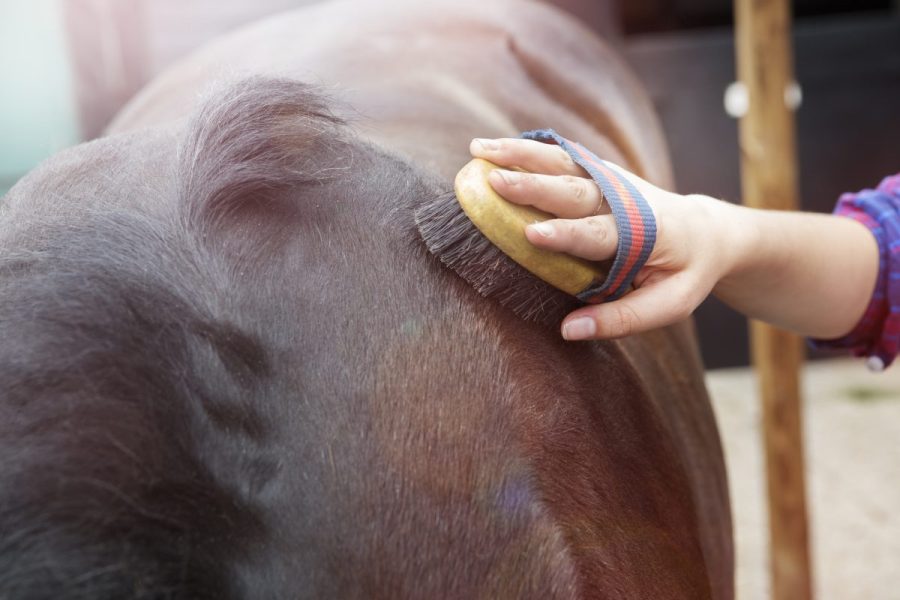
On show day, Vikki brushes thoroughly before applying a lightweight, silicone-free shine spray.
“There’s no point putting finishing products over dust. You need to get right down into the coat first.”
For manes and tails, she favours detanglers and lightweight conditioning lotions that add shine without making the hair greasy or clumpy.
Finishing touches
Subtle makeup can enhance the eyes and muzzle, while carefully blended cover-up products help disguise minor blemishes.
“The trick is not to overdo it. On a grey pony, for example, I’d dilute black makeup with a little shine product so the eyes look defined without appearing too dark.”
A conditioning gloss highlights the face, while clear hoof shine provides a polished finish without looking unnatural.
Above all, Vikki stresses that successful native turnout is about balance.
“You want everything to look beautifully presented, but still natural. It’s those little details that make the difference in the ring.”
Photo credit: Getty Images
Related content
- Horse grooming: expert advice for a mud- and dust-free coat that shines
- Horses love getting muddy and they need to roll outside every day, experts say
- Alan Davies’ grooming brushes range, plus the top groom’s daily grooming routine
- Horse grooming vacuum: what they are, how they work and where to buy one
- How to keep any mane looking trim, tidy and looking smart
- How to plait a horse’s tail