
Sponsored content in collaboration with Dengie
Changing weather patterns are affecting not only the availability of forage in some areas of the UK, but can also impact its nutrient content.
As forage should make up the majority of your horse’s diet, any change in nutritional quality can also have a significant impact on their nutrient intake.
Balancers or forages rich in quality protein such as alfalfa and sainfoin are two ways that shortfalls in grass hay can be counteracted.
Advice for good doers
For good doers at rest or in light work, lower-energy forage may be helpful, because it can make weight management easier.
However, higher water-soluble carbohydrates (WSC) levels are more concerning for horses with insulin dysregulation, including those with equine metabolic syndrome (EMS) or pituitary pars intermedia dysfunction (PPID), also known as Cushing’s disease.
This is because diets high in WSC can produce a greater insulinaemic response after eating and may increase laminitis risk.
Reducing WSC intake
One way to reduce overall water-soluble carbohydrate intake is to replace part of the forage ration with straw, which is naturally lower in WSC than hay and haylage.
Up to 50% of the grass forage ration can be replaced with straw. As with any change, straw should be introduced gradually and increased over time.
Oat, wheat or barley straw have been used in different scientific studies. Which to use is largely determined by what is available locally.
More farmers are aware that straw is a valuable forage source for a range of species and are considering things such as hygienic quality. Straw can be steamed or dampened if you have any concerns.
Advice for poor doers
In contrast, poor doers or horses in harder work won’t do so well on lower digestible energy forage. In these cases, fibre-rich feeds, such as alfalfa, early-cut dried grasses and sugar beet, can help increase energy intake while still basing the diet on fibrous feeds.
Protein is another area to consider. A decline in protein supplied by forage may have an impact on those with the greatest requirements, such as breeding and youngstock.
Those on more restricted rations, such as dieting horses and ponies, are often not receiving enough protein, particularly lysine, so supplementary feeds are essential to ensure the diet is balanced.
Lysine is an essential amino acid and building block of protein, which must be supplied in the diet as it cannot be synthesised in the body.
Mind the minerals gap
UK pasture and conserved forage are also commonly short of copper, selenium and zinc.
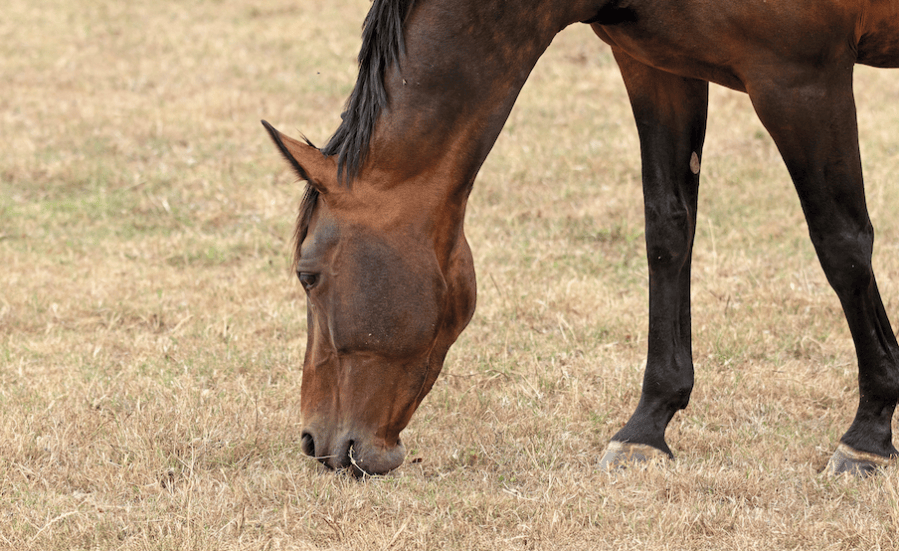
There is a misconception that vitamins and minerals are unnecessary in summer, because grass supplies everything a horse needs. However, grass is a valuable but incomplete source of vitamins and minerals, and when it is dried to a crisp in periods of drought, its contribution is reduced.
There is also evidence that the flooding that is occurring more regularly is also contributing to minerals being washed out of soils, so this situation
is only likely to get worse over time.
Analysis is best
Forage analysis is the best way to understand what your forage is contributing to your horse’s diet, but it is not always practical if your supply changes regularly.
Even so, analysis trends are useful. Results suggest that protein and digestible energy levels in forage have fallen over time, while water-soluble carbohydrates — its sugar content — have increased. What this means in practice depends very much on the horse.
Look for a broad-spectrum balancer
For horses on forage-only diets, a broad-spectrum vitamin and mineral supplement or balancer can help keep the ration balanced.
A vitamin and mineral supplement provides micronutrients but typically contains less quality protein than a balancer. If you need help determining which is best for your horse or pony, contact a nutritionist for advice.
For advice targeted to your own horse, contact the Dengie helpline on 01621 841188 or fill in a Feed Advice Form.
Related content
- The UK hay crisis: how extreme weather is redefining forage, welfare and costs for horse owners
- Worried about a hay shortage? Alternative sources of forage to consider instead
- Hay shortage update: What horse owners need to know about this winter’s forage supplies *Ad feature*
- Forage replacers for every horse and pony when hay and grazing is poor *Ad feature*