
Sponsored content in collaboration with Dengie
Changing weather patterns are affecting grazing and forage availability across the UK, but Dengie’s range of short chop and pelleted fibre feeds can be used as partial or full forage replacers to help you meet your horse or pony’s fibre requirements.
The British weather is changing and the UK has been experiencing longer periods of drought more frequently, which is having an impact on grazing and availability of forage. A forage replacer is a useful alternative and can make forage last longer.
Using a couple of kilos (the typical weight of a section of a small bale of hay) each day is practical for most people to use and is between 20-25% of a 500kg horse’s requirement.
For when forage is just too good…
Sometimes your forage or grazing is just too good for your horse or pony. Using a low-calorie chopped fibre feed can help reduce the calories provided by forage.
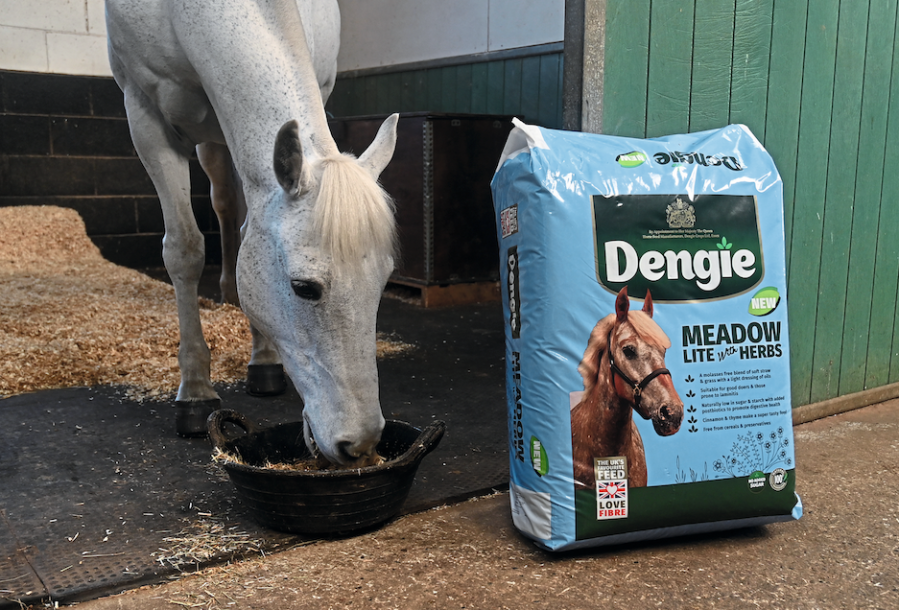
Dengie Meadow Lite with Herbs is a soft blend of grass and soft straw with tasty herbs and postbiotics to support digestive health.
Naturally low in sugar at just 3% and starch at 0.5%, it can be fed ad lib as a low-calorie forage replacer.
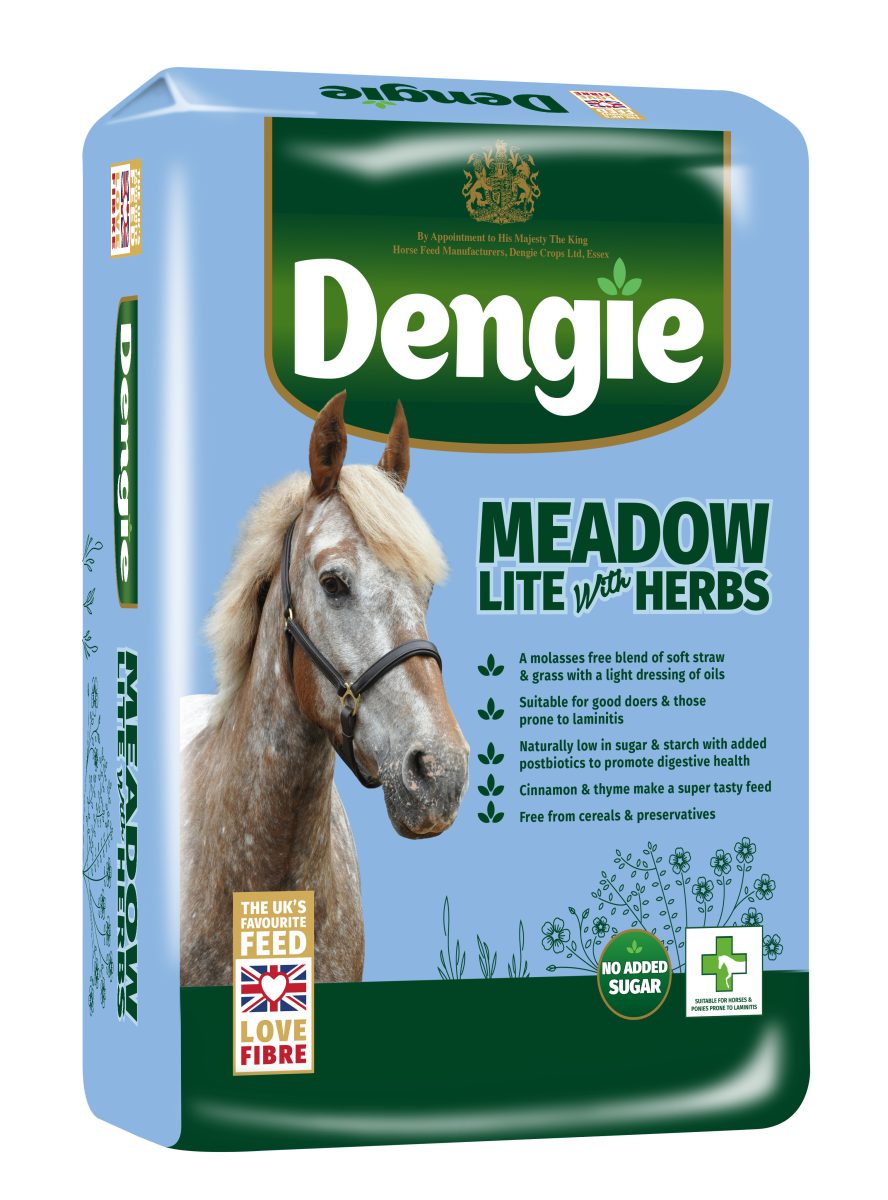
Alternatively, opt for Dengie Hi-Fi Lite, a straw and alfalfa blend with a light molasses coating. Offer a large tub trug to help keep the good doer chewing and occupied while stabled.
For when forage is just not good enough!
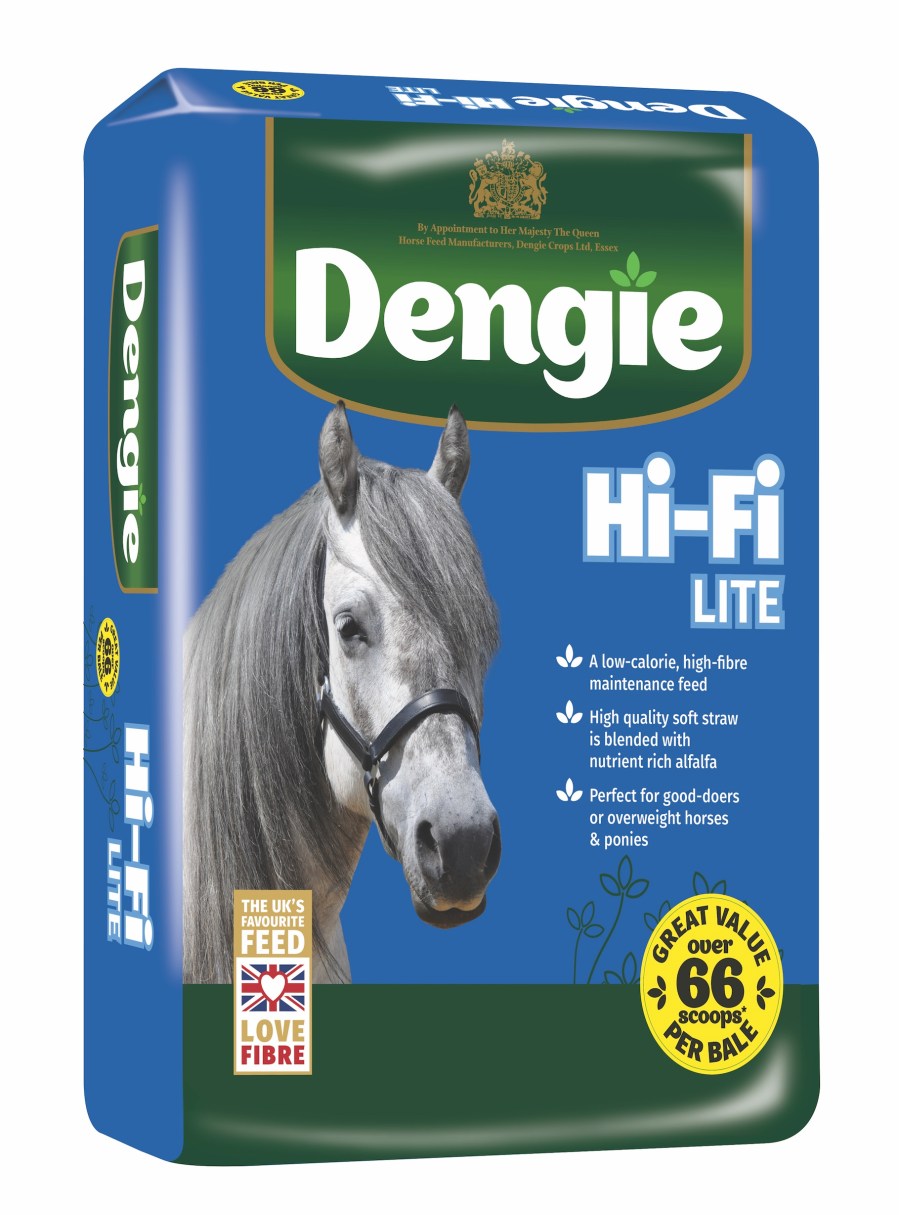
At the other end of the spectrum, poor grazing or late cut forages are likely to be less nutritious. Using a higher calorie forage replacer is an easy and safe way to provide extra calories without having to use more cereal-based feeds.
Dengie Meadow Grass with Herbs & Oil can be fed up to 1kg per 100kg of bodyweight as a partial forage replacer.
Help for poor dentition
A compromised ability to chew is not just a problem for veterans as diastemas are increasingly being diagnosed at any age.
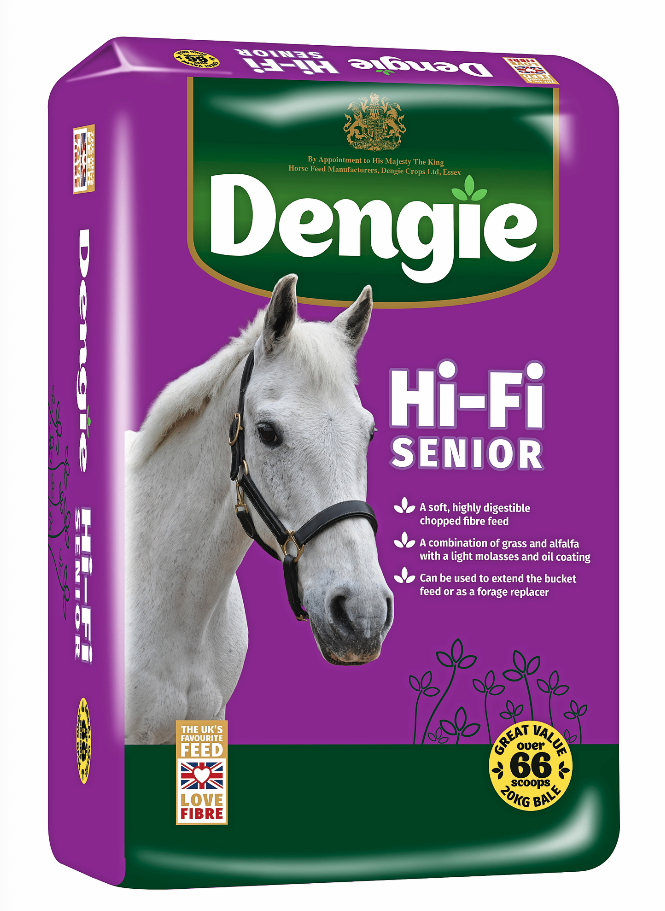
If the horse or pony can still manage a short, soft chop, then one that can be used as a complete forage replacer is Dengie Hi-Fi Senior. This can be fed to horses and ponies of any age and combines grass and alfalfa. Feed on a weight-for-weight basis to replace hay.
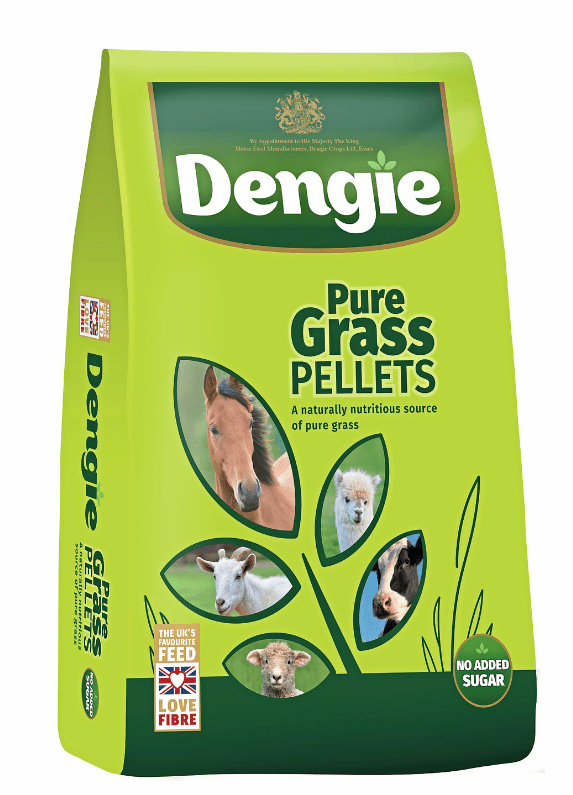
If they can no longer manage any chopped fibre, then Dengie Grass Pellets can be soaked and fed as a mash. It helps to increase water intake and so is great to use in hot weather and during the colder months when your horse or pony may be more reluctant to drink.
5 facts about forage replacers
- Not all feeds can be used as a forage replacer for horses and ponies — they must be high fibre and low starch as well as being nutritionally comparable to forage to be suitable.
- Feeding insufficient forage replacer, and therefore fibre, increases the risk of digestive issues, including colic and loose droppings. Make sure you weigh a forage replacer to ensure you are feeding enough.
- A minimum of 1.5% of bodyweight on a dry matter basis should be provided daily when totally replacing the usual forage ration. For a 500kg horse, this is 7.5kg dry matter. Given that many forage replacers are around 90% dry matter, this is 8.3kg of forage replacer as fed (7.5/0.9). Call the Dengie feedline to speak to a qualified nutritionist if you’d like help calculating your horse or pony’s ration.
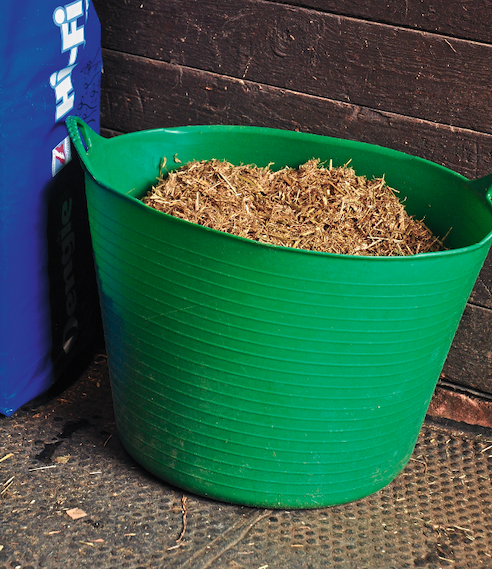
- Forage replacers can’t be fed in a net. They should be fed in a large, wide-bottomed bucket. Putting a football or some large, smooth pebbles on top can help to slow intake.
- Like all dietary changes, a forage replacer should be introduced gradually into the ration over the period of at least a few weeks. Once a forage replacer has been gradually introduced, it is appropriate to give it to the horse in larger amounts.
Top tip!
Offering a bucket or two of chopped fibre alongside the usual forage ration is a great way to keep your horse or pony interested and encourage foraging behaviour, especially when stabled for longer periods.
Find out more about the full Dengie range at dengie.com