
Sponsored content in collaboration with Dengie
Helping an overweight or fat horse lose weight takes time, dedication and a lot of careful management, and it is easy for some of those early good habits to slip once progress starts to show.
However, reaching a healthier weight is only part of the picture — regular monitoring and small day-to-day checks are just as important when it comes to keeping your horse on the right track.
Here are 10 practical tips to help you manage your horse’s weight long-term.
1 Weigh your horse regularly
Using a weigh tape every two weeks will help to identify the trajectory of your horse’s weight. If it starts to creep up, then you will be aware and able to act sooner.
If you have the opportunity to weigh your horse on a weighbridge, use the weigh tape at the same time to ‘calibrate’ how much difference in weight there is between the two.
Weight loss takes time and it has been suggested that losing between 0.5-1% of bodyweight per week is safe and realistic. That means, if a 500kg horse has 100kg to lose, based on a loss of 0.5% of bodyweight per week it will take almost a year to achieve your target.
Plot your horse’s weight on a graph to see how far they’ve come and how your hard work has paid off.
2 Fat score monthly
Fat scoring is the most practical tool we have to identify if your horse still needs to lose weight or whether they have reached a healthy weight. However, changes in fat score can be frustratingly slow, so don’t be disheartened if it is taking time for a change in fat score to be apparent.
On the five-point fat scoring scale, it takes around 40-60kg of weight to be lost to reduce the score by one point, but if your horse was a 5+ on this scale, then it could take much more.
Taking photos from the side and from behind can also help you ‘step back’ and see changes in your horse’s weight over time when reviewing the pictures.
3 Grazing muzzles
If you are using one, check the grazing muzzle hole(s) regularly and the grass length in the paddock. Over time with regular use, the size of the hole(s) in your horse’s grazing muzzle can increase with wear. A bigger hole means more to eat, so replace as necessary.
As the summer progresses, and particularly if we have drought conditions, check the grass remains long enough to poke through the muzzle hole(s).
It’s important your horse still has something to eat, so consider what alternative options you have available if there isn’t enough grass.
4 Strip grazing
If you strip graze, keep an eye on the grass growth in your strip and compare to an ungrazed area outside of the strip.
If your horse’s isn’t losing weight, and the grass is actively growing in the ungrazed area, it may mean that the size of your horse’s strip needs to be reduced to continue to encourage weight loss.
Equally, if the grass is very sparse in the strip, and not actively growing in the ungrazed area, then additional forage will need to be provided to maintain digestive health.
Plan ahead so that, if extra forage is needed, you don’t undo your hard work by introducing higher-calorie options.
Soaked hay, straw, or low-calorie forage replacers such as Dengie Meadow Lite with Herbs can all help maintain forage intake while supporting digestive and behavioural health.
5 Count the droppings
Count the number of droppings you are picking up. This can give an idea of whether your horse’s food intake is increasing or decreasing over a period of time.
Keeping an eye on the consistency of droppings and knowing what’s normal for your horse can also give you a ‘window’ into their digestive health.
6 Check their diet is balanced
If you have made significant changes to your horse’s diet then their essential nutrient intake will also be significantly reduced. Possible changes include restricted or no grazing, feeding soaked hay, using more straw in their diet, all of which means the horse’s essential nutrient intake will be significantly reduced.
This may mean they need a higher feeding rate than usual of products (supplements or balancers) to maintain a balanced diet or require a higher specification product.
Work with an ENFAR-registered equine nutritionist or feed adviser who will be able to help advise the most appropriate products to ensure that your horse’s diet remains balanced.
Check out the BETA Equine Nutritionist and Feed Adviser Register (ENFAR).
7 Weigh all forage
Weigh supplementary conserved forage — not only what’s offered, but also what’s left over.
If you are providing your horse’s minimum forage requirement of 1.5% of their bodyweight on a dry matter basis daily in a bid to manage their weight and they aren’t eating it all, then they won’t be consuming sufficient forage.
Soaking hay in the summer months when the weather is hotter can make it less palatable and a shorter soaking time may be necessary. When introducing straw to the diet it can also take some getting used to.
8 Get forage tested
At this time of year, you are likely to be moving on to a new supply of conserved forage post-harvest.
If you have a consistent supply, getting it tested with a basic NIR package can be useful to give an overview of its nutritional quality, including an estimate of digestible energy (DE), which tells us how calorific the forage is.
If you know the forage is likely to supply more energy than your horse needs to maintain weight, then you can take additional measures to reduce the calorie intake from forage by soaking the hay, or by mixing straw through the hay or haylage ration.
Straw should only be considered if your horse has good teeth and must be introduced gradually to the diet to allow time for the digestive system to adapt.
9 Keep a record of the work they’re doing
Keep a diary of your horse’s exercise. It can be really helpful to track how much and what exercise they are doing, plus any notes about the sessions.
Doing this can give you some good insight into your progress. If you notice that your horse is getting fitter and finding the work easier, then it’s a good sign your hard work is paying off.
10 Monitor insulin levels
If your horse is overweight and has been diagnosed with equine metabolic syndrome (EMS), work with your vet to monitor insulin levels, as these can help to indicate how at risk of laminitis your horse is, and whether further dietary management changes are required.
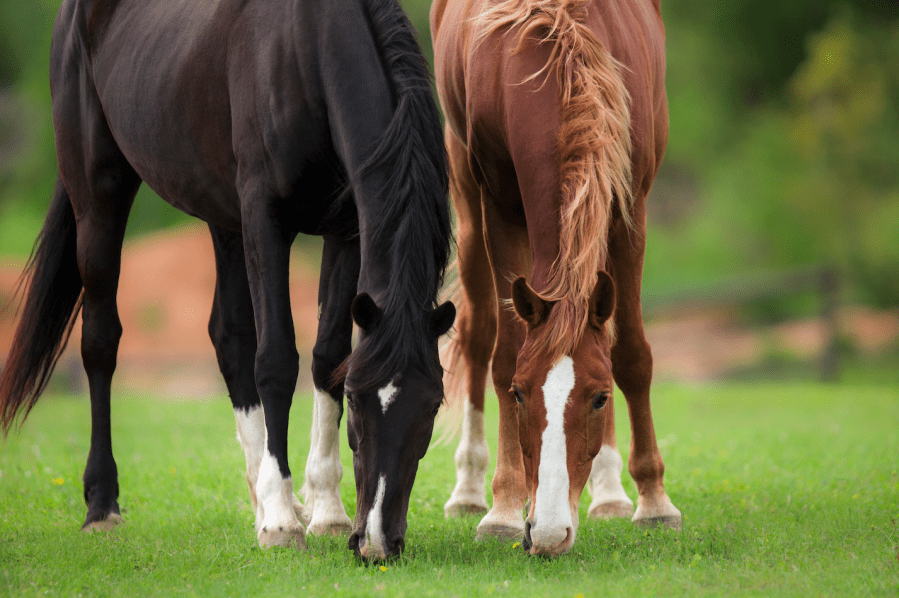
Main image © Shutterstock