

Researchers at the Royal Veterinary College (RVC) have identified a potential new drug target for osteoarthritis (OA) which could improve how the disease is managed in both humans and animals.
The researchers identified two closely related proteins, Cyclin-Dependent Kinase 8 and 19 (CDK8/19), as a mediator and drug target in OA disease cell models. The team then tested a CDK8/19 inhibitor in mice to assess its impact on joint health and mobility.
The study found that mice receiving the inhibitor treatment showed improved gait characteristics and greater ability to complete treadmill exercise tests, alongside reduced weight gain and lower levels of OA biomarkers in the blood. Analysis of the cells and tissues of the treated mouse knee joints also revealed improvements in cartilage composition.
OA, which is characterised by the breakdown of cartilage, changes to the underlying bone, and inflammation within the joint, is the most common form of arthritis. It is estimated to affect at least one of the four joint regions (hand, hip, foot and knee) in more than 527 million people around the world. Ageing and obesity are two risk factors.
OA in horses
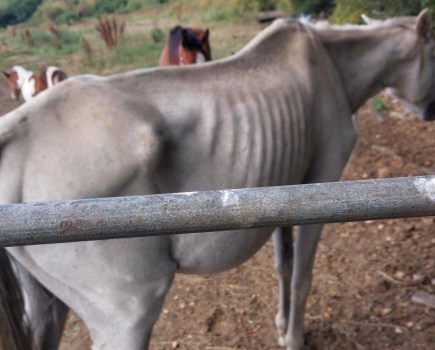
OA is also a major problem in animals, particularly horses. More than 50% of horses aged over 15 have the disease and this figure rises to 90% when horses are aged over 30. There are currently no approved treatments that can reliably slow, reverse or halt the progression of OA.
Further investigation using micro-computed tomography, which provides detailed 3D images of bone, demonstrated that the treatment also affected changes to bone and cartilage associated with OA.
“This research provides a fundamental understanding of the mechanisms by which cells become disease-causing in osteoarthritis and, importantly, provides a pharmaceutical option for disease reversal,” said Dr Scott Roberts, Reader in Translational Skeletal Research at the RVC’s Skeletal Biology Group.
“This is hugely exciting and impactful given the absence of any disease modifying osteoarthritis drugs. The next stage of this project is to transition the research from preclinical into proof-of-concept studies to show disease modifying efficacy in a patient population.”
The study was carried out by a team of researchers from across the RVC, University of Oxford, Middlesex University and the Institute of Cancer Research (ICR) and was led by Dr Scott Roberts. The project was funded by the RVC’s Mellon Fund for Equine Research and Higher Education Innovation Funding (HEIF).
‘Encouraging findings’
Dr Paul Clarke, Group Leader, Centre for Cancer Drug Discovery at the Institute of Cancer Research (ICR), said: “At the ICR, in collaboration with Merck Healthcare KGaA (Darmstadt, Germany) and Cardiff University, we discovered and developed potent and highly selective drugs targeting CDK8 and CDK19.
“Although these proved unsuitable for treating cancer, we were pleased to work with the Royal Veterinary College to explore the potential of repurposing these compounds. We are delighted to see the encouraging findings of using these compounds to treat osteoarthritis, a disease that affects millions of people worldwide.
“It is tremendously rewarding to see these molecules finding new purpose, and we look forward to continuing our collaboration with Dr Roberts and his colleagues to advance these important preclinical observations toward proof-of-concept studies in patients.”
The findings are currently limited to preclinical studies, and further research will be needed before the approach can be tested as a treatment in patients.
The main image, provided by the RVC, shows an AI image representation of knee and hip osteoarthritis being treated with CDK8/19 inhibitor © Generated using Gemini.