

Horse owners have been warmed that warm weather is linked to higher parasite risk, and are urged not to delay worm egg count testing.
New analysis of more than 50,000 UK worm egg count results highlights the importance of sticking to 8 to 12-week testing intervals.
Equine parasite specialists, Westgate Labs, said sustained high temperatures replicate the conditions that saw significantly more horses requiring treatment in 2025.
“One of the biggest misconceptions we hear is ‘my horse looks fine, so I can leave it another month’. Last year’s data showed that isn’t always the case.,” said Kristy Hodgson, Director at Westgate Labs.
“Regular testing allows us to spot changes before they become a problem. If owners stretch the interval between tests, there’s a greater chance that horses shedding higher numbers of parasite eggs will contaminate the pasture for longer, increasing infection pressure for the whole group.
“Testing every eight to twelve weeks means you’re responding to what’s happening now, rather than what happened three or four months ago. This intervention could easily prevent a bigger problem down the line.”
Significant results
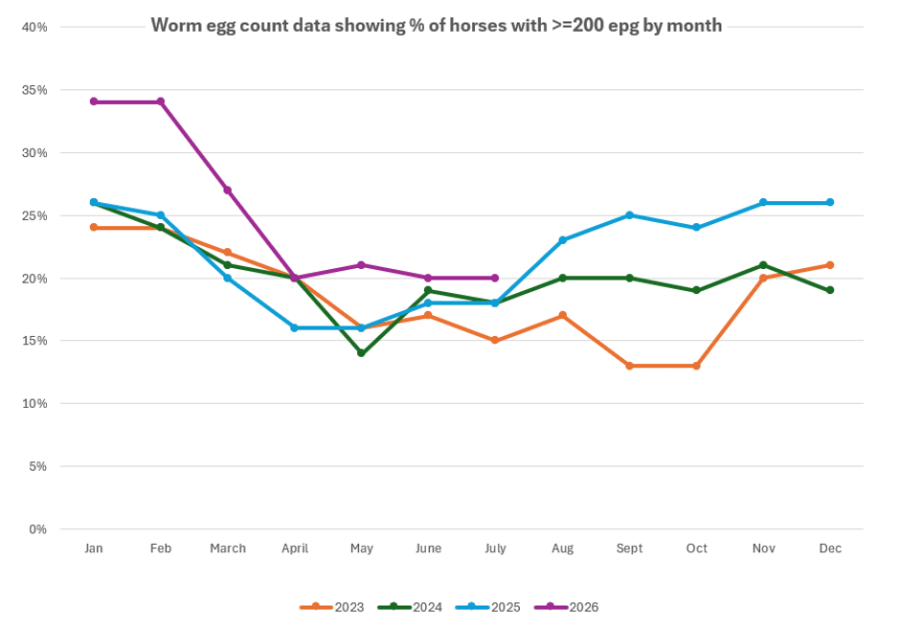
With 2026 having already brought record breaking spring temperatures and repeated summer heatwaves, Westgate is encouraging owners to keep to the recommended testing intervals, even for horses that have historically returned low worm egg counts.
Analysis of Westgate Labs’ autumn and winter worm egg count results showed that around 27% of horses exceeded the treatment threshold during 2025/26, compared with 21% during 2024/25 and 18% during 2023/24.
After allowing for the normal seasonal rise in egg shedding through autumn and winter, the increase remained statistically significant.
The small redworm has a fast lifecycle of around 4-6 weeks. Experts have summarised that the warm weather accelerates the larval development phase of the parasites, allowing horses to become more readily infected as they graze.
This, combined with burnt off paddocks and low grass growth means reduced opportunity to rest and rotate grazing. With less forage available, horses have been cropping the grass closer to the soil and dung piles, further increasing infection potential.
Horse owners are encouraged to review when they last tested. If it has been eight weeks or more, Westgate said it is time to collect fresh samples before heading into the autumn.