
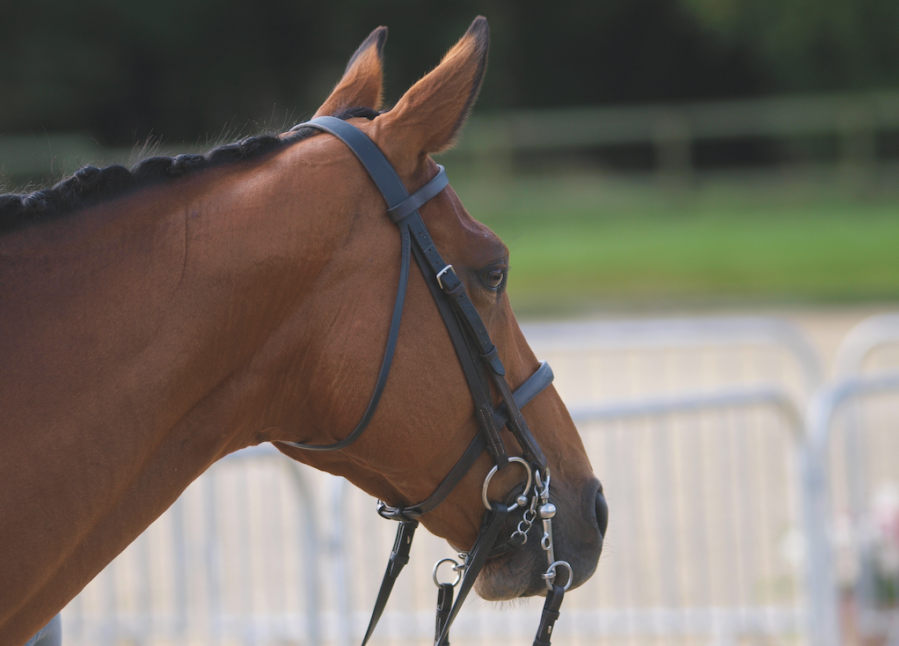
A study has shed new light on how the double bridle interacts with the horse, revealing that even with little contact, the horse can generate high tensions in both the curb chain and curb cheekpiece.
The research, conducted by Dr David Marlin, Dr Rachel Murray, Dr Russell MacKechnie-Guire and Dr Graham Cross, measured the tension between the rider’s hands and the bit, between the bit and the cheekpiece and in the curb chain in a Prix St Georges level dressage horse ridden in a double bridle with a curb bit.
The team found that increasing tension on the cheekpiece increases pressure on the top of the horse’s head, whilst increasing tension on the curb chain can increase pressure in the mouth via the action on the bit.
In the absence of rein tension from the rider, the increased curb and cheekpiece tensions must be generated by the horse’s own movements.
“This pilot study raises the possibility that even with a correctly fitted bridle, the horse can generate high forces in the mouth and on the poll when the rider has almost no contact,” said Dr Marlin.
“Whilst we would want to see aggressive riding properly dealt with by stakeholders, it’s vital that we base rules and interpretations on fact rather than opinion”
Method of the study
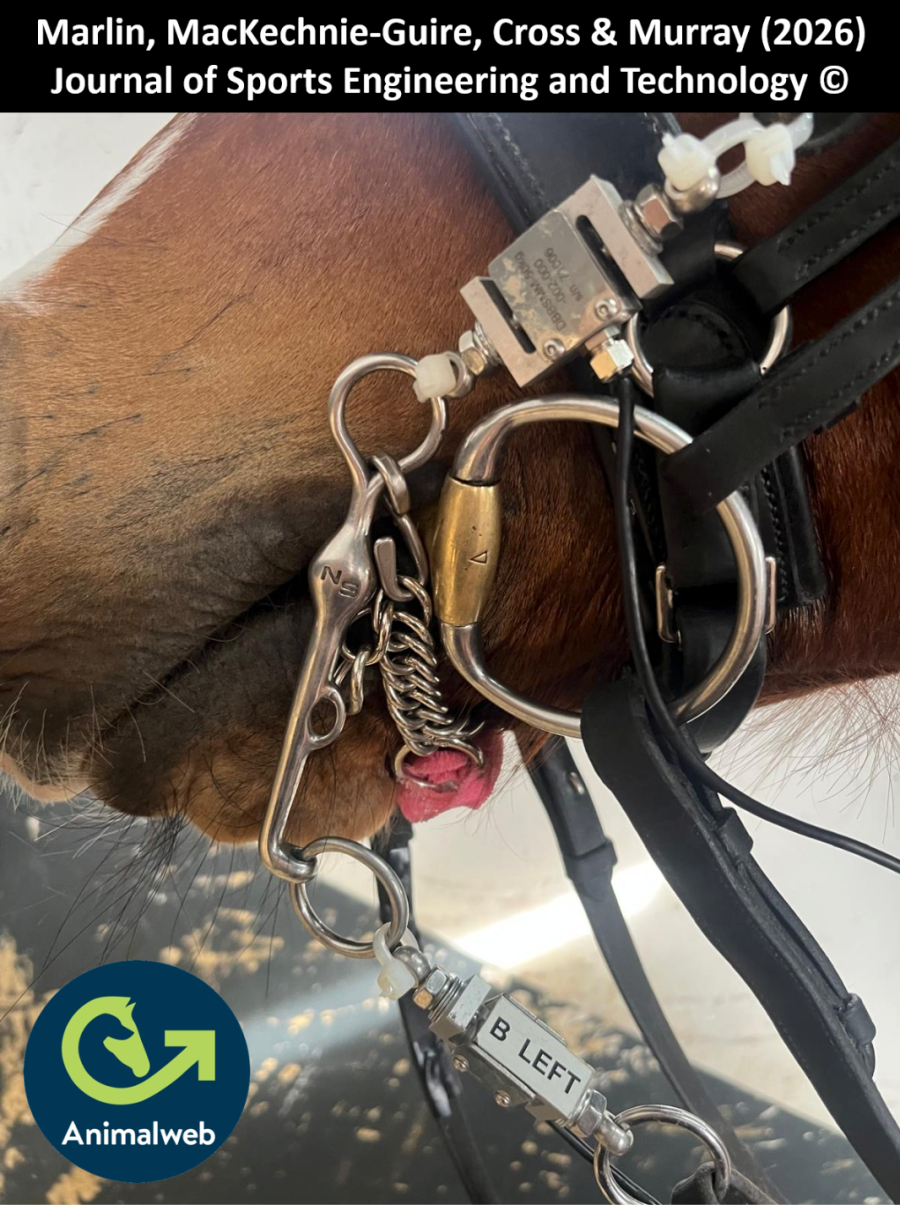
To record tension, force sensors were fitted between the left upper curb ring and the left curb cheekpiece, the left lower curb ring and left rein and sensor inserted in the middle of a modified curb chain, which was covered by an adhesive bandage for comfort.
In walk, trot and canter, the majority of the variation in curb chain and cheekpiece tensions could not be explained by the rider’s actions through the reins. The team said this highlights the complex interaction between the bridles, bits, the horse and the rider.
Having this data also allowed the authors to confirm their previous theoretical estimates of the forces acting in the mouth from the bit.
The conclusion from both these studies is that forces generated by the curb mouthpiece via the reins are equivalent to the rein tension or some multiple, but not as high as some previous researchers have proposed.
Careful selection and fitting
“This pilot study reinforces the importance of careful bit and bridle selection and fitting, as well as the need for rider education and training to ensure horse comfort and performance,” said Dr Russell MacKechnie-Guire.
Dr Rachel Murray noted that there was a need for more study in this area as this was a pilot in one horse, “but it does illustrate the need for science and evidence as opposed to opinion”.
The study, A preliminary investigation quantifying curb rein, curb cheekpiece and curb chain tensions in a horse ridden in
a double bridle with estimates for intra-oral forces, can be read in full here.
The research was funded by Animalweb and the authors.
Lead image (top): Stock image by Shutterstock