
Sponsored content in association with SPILLERS
As our equine companions get older, their nutritional needs evolve, and many owners of veteran horses and ponies find themselves wondering if they should change their feed as they age.
With the term senior encompassing anything from 16-40+ years, there’s a diverse range of individual needs to consider, which means there’s no single answer.
Start with body condition
To put it simply, an overweight horse needs less calories and a lean horse needs more calories — this is true of all equines, regardless of age.
Those who are in a healthy body condition need to maintain the calories they’re on.
Consider any clinical issues
Health considerations play a significant role in diet planning. Those who develop clinical issues will be limited by what feeds they should eat.
Is the horse still active?
Activity level is another important factor — exercise burns calories. Active, laid-back seniors may benefit from a little extra energy.
What is the horse currently eating?
Knowing how much a horse is currently consuming helps establish what adjustments may need to be made to the diet.
This includes all hard feeds, supplements, forage, and grazing. While we can’t measure grass intake, we can consider the quality of the grass and time spent grazing.
Consider your horse’s living arrangements
Your horse’s environment will impact their diet and wellbeing. Some yards don’t allow certain management practices; some have excessive grazing.
Ask yourself: are you able to care for your horse the way you need to — or might there be a better facility nearby?
Know your horse — is it common for them to lose weight in winter?
One of the most important principles to get right when it comes to feeding horses and ponies is to provide them with a balanced diet.
By gathering as much information as possible, we can then work out ‘how’ to achieve this.
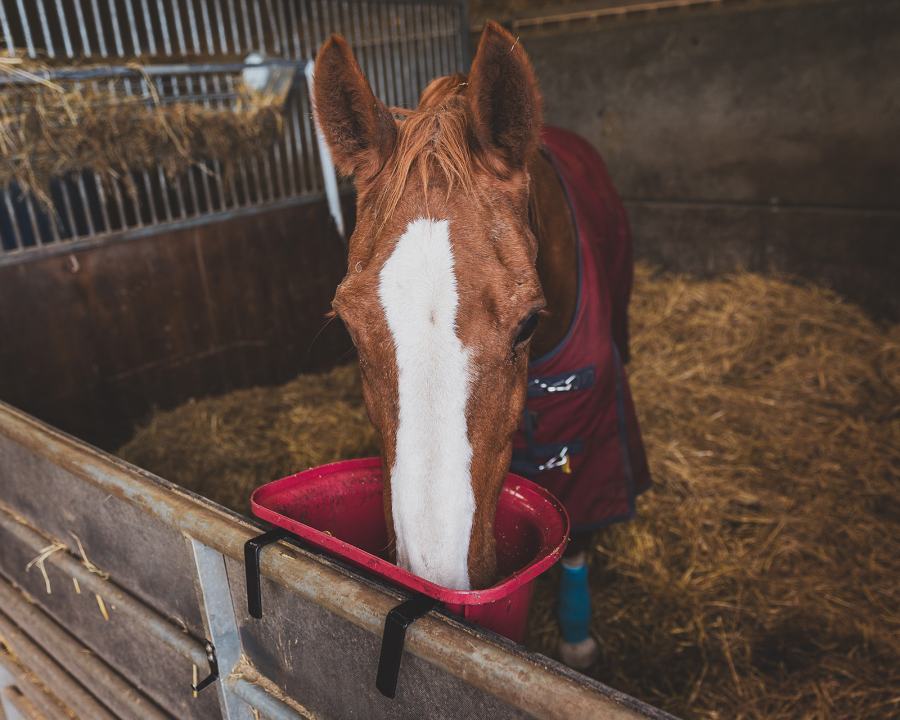
Good doers — no extra calories needed!
Balancers provide minimal calories, but maximum nutrition.
For any horse maintaining their weight well on grazing and forage alone, a feed balancer is the ideal way to ensure they receive all the essential vitamins, minerals and quality protein they need to thrive from minimal calories.
Some calories required?
Choose lower calorie feeds or a 50/50 diet.
Some horses need a few more calories but don’t require a full ration of compound feed. Alongside plentiful forage, feeding a combination of half a ration of cube/ mix/ mash and a half ration of balancer can be effective.
When selecting feeds consider the feeding rate and calorie content, measured in megajoules (MJ) of Digestible Energy (DE).
Low-calorie feeds are typically around 8 to 9 MJ DE/kg, while high-calorie feeds are around 12 to 13 MJ DE/kg.
Poor doer — lots of calories needed!
Choose higher calorie feeds.
For horses who need substantial extra calories on top of grass and plentiful forage to maintain their weight, aim to choose high calorie feeds – make sure you still supply a balanced diet.
Keep meals small, feed no more than 2kgs per meal by dry weight and feed two, three or even four times a day.
Struggling to eat enough forage?
Hay replacer required.
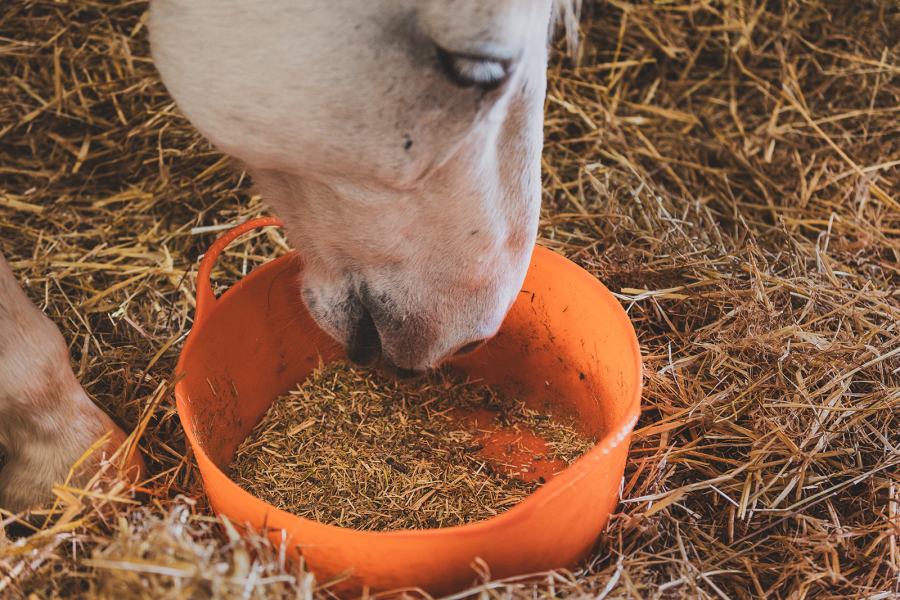
For senior horses with failing dental health, they may struggle to eat enough forage/grass to maintain their weight, even if on 5-6kg of hard feed per day.
Hay replacers or mashes may become essential. Substitute 1kg of dry hay with 1kg of the feed and always check the instructions on the bag.
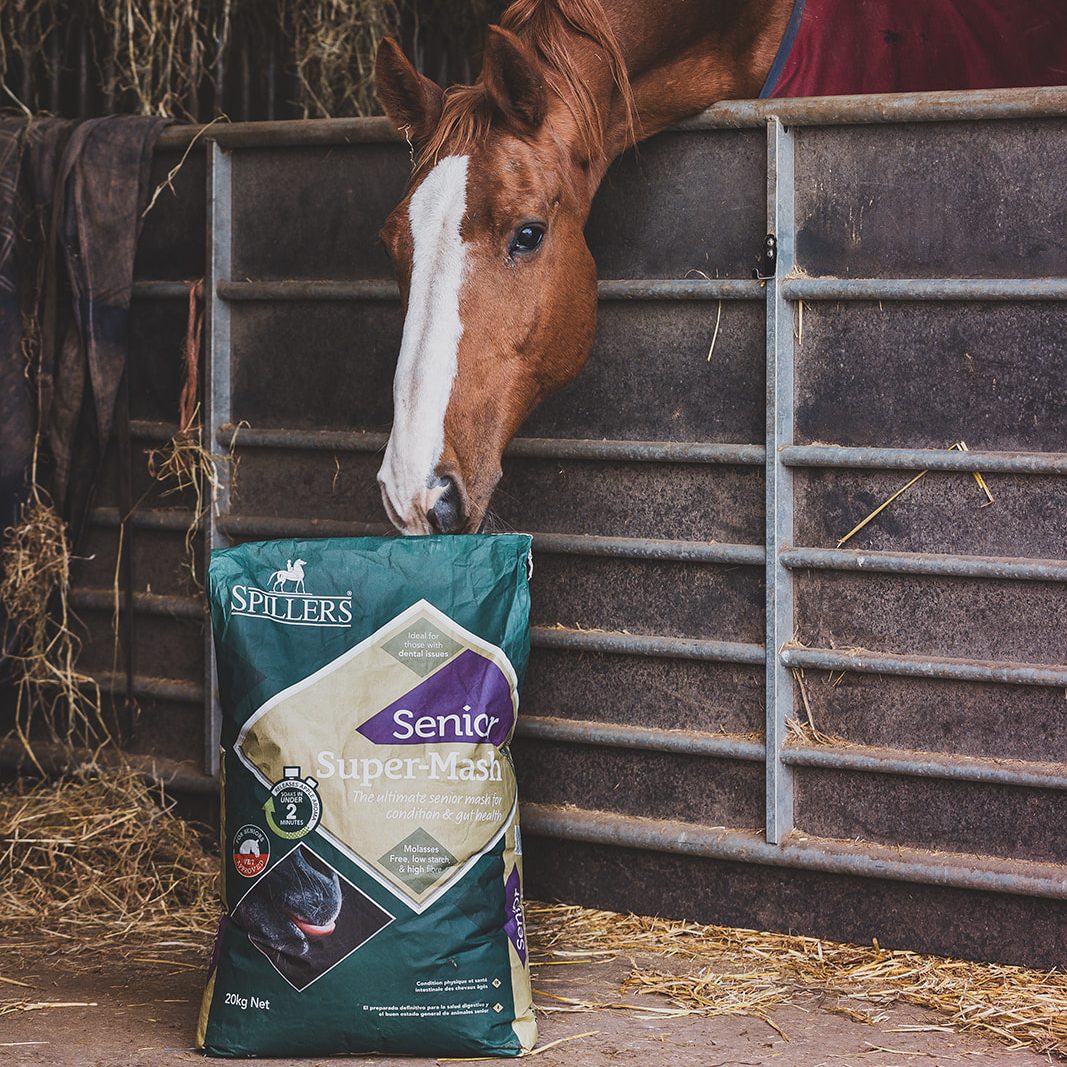
How senior feeds differ from leisure horse feeds
Many senior feeds include higher levels of protein to support muscle and topline and are often medium/high calorie to reduce the risk of weight loss.
Senior feeds may also contain extra nutrients to support immunity and muscle health, plus pre- and probiotics for digestive support or ingredients such as glucosamine to support joint health.
Senior horses are as diverse as the people who care for them, and their diet should reflect that individuality. By providing the right balanced diet you can help them thrive.
If you’re unsure, reach out to a nutrition specialist — they’re there to help!