

A small robot designed to combat ragwort will begin field trials at farms and across land in Dorset this summer.
The electrically powered platform, named Raggy by its creators, has arrived at Dorset Innovation Park, which has a growing reputation as a hub for testing uncrewed systems across land, air and sea, for final testing.
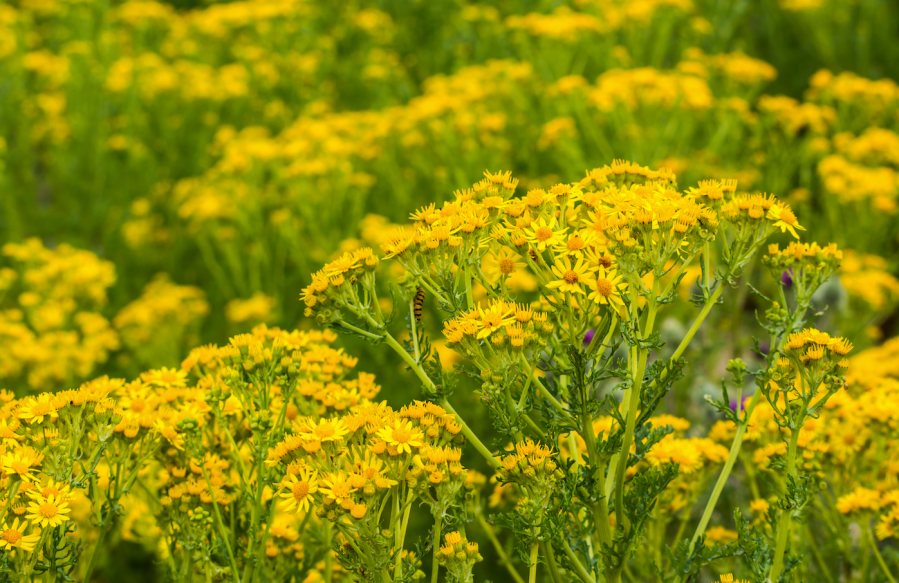
Ragwort is a poisonous weed which can be deadly if eaten by horses, cattle and other animals, whether consumed fresh or dried. Usually it is pulled up by hand, which is labour intensive, costly and can pose risks to people and the environment.
The aim of Raggy is to detect and remove ragwort while reducing chemical use and labour demands.
The root of the problem
“Raggy uses advanced machine vision and connected technology, powered by the Qualcomm Dragonwing platform, to identify and remove ragwort mechanically at the root,” said Jake Shaw-Sutton, director at Robotriks, a South West firm who helped develop the robot.
“This approach reduces the need for harmful chemicals, supports healthier soils and protects animals and habitat.”
Robotriks developed Raggy in partnership with Dorset Council and long-time collaborators Telint and Neutral Networks using funding from Qualomm Incorporated through its Qualcomm for Good Initiative, which aims to enrich lives through programmes that strengthen economic and social development.
“Through Qualcomm for Good, we are proud to support Dorset Council and Robotriks in harnessing edge AI capabilities to modernise agriculture and solve real-world challenges for farmers and the environment,” said Ben Timmons, senior director, Business Development of Qualcomm Technologies International, Ltd.
“Raggy is a powerful demonstration of what’s possible with intelligent connected technologies.”
Reducing workloads
Between field trials, Raggy will be maintained and stored at BattleLab collaboration centre at Dorset Innovation Park.
“The team of Rangers, who do a great job managing and maintaining Dorset’s fantastic Country Parks, nature reserves and open spaces, spend many hours each year removing ragwort by hand,” said Cllr Nick Ireland, leader of Dorset Council.
“We are delighted this autonomous and environmentally sensitive solution is being tested, evaluated and developed on our land here in Dorset.”
Main image © Dorset Council, inset image © Shutterstock.