
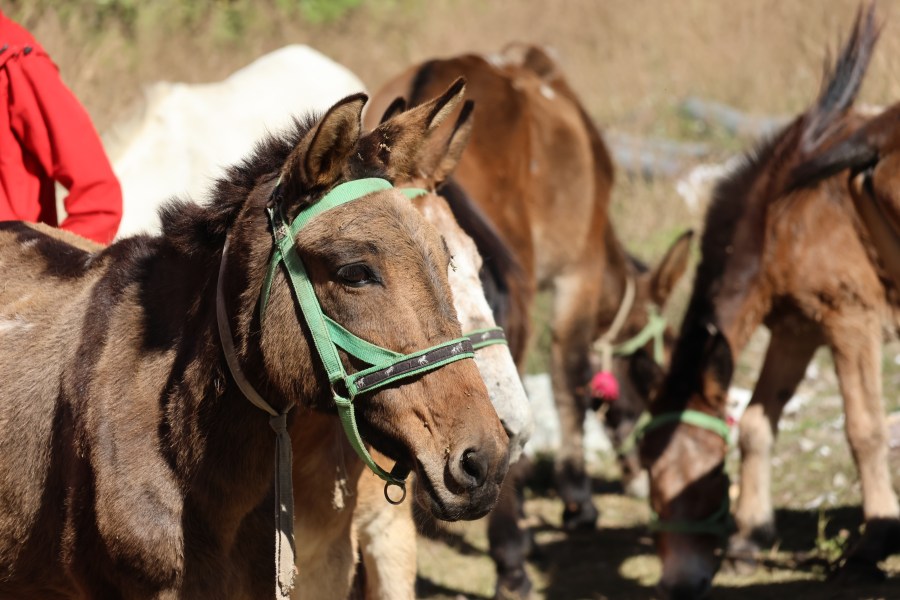
Improved standards for the mules of Nepal are on the horizon thanks to a pioneering project to boost their welfare while fostering environmental sustainability and strengthening remote communities.
The Donkey Sanctuary is part of a consortium behind the Gallop for Good project, which aims to create positive and sustainable change across a wide range of areas, including animal welfare, human wellbeing and environmental conservation.
The charity has a long history of working with partners in Nepal, however Gallop for Good is a first for the Donkey Sanctuary because of its focus on creating a replicable model of change.
Led by Aasaman Nepal, the consortium comprises several local partners, Animal Health Training and Consultancy Service (AHTCS), Preservation of Environment and Social Welfare Association of Nepal (PESWAN) and Health Concern (HC), bringing together expertise in a number of specialist fields.
The project aims to demonstrate how improving the welfare of mules will not only enhance their health and working conditions, it will also strengthen the livelihoods and wellbeing of the people who rely on them.
Recent natural disasters in the region have increased the burden on mule owners and reduced their ability to care for their animals, and therefore disaster risk reduction is integral to the project. In particular the growing of plant species that provide green fodder for mules and help prevent landslides, which is hoped to create a more resilient ecosystem that benefits both mules and humans alike.
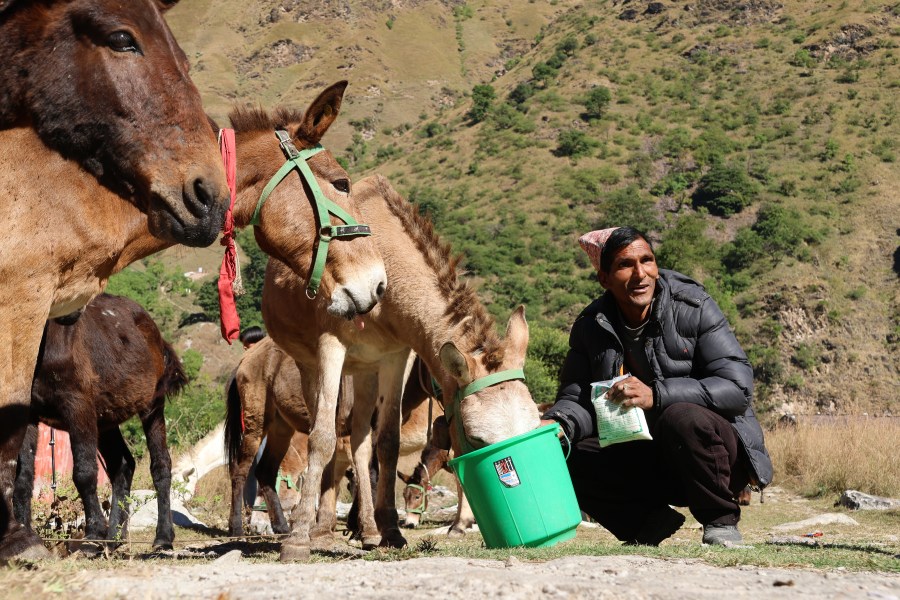
Additionally, the project will consider how diversifying mule owners’ livelihoods can lead to improvements in mule welfare, both by increasing household income, enabling owners to invest more in their animals, and by reducing the strain on the mules as the sole option for income generation.
The project was launched in November at a meeting of stakeholders, who included Marianne Steele, CEO of The Donkey Sanctuary, in Nalgad located in the western region of Jajarkot. This was followed by a series of activities including veterinary camps, school visits and community workshops.
During one veterinary camp in the community of Tallubagar, 18 owners attended with more than 100 equines, 81 of which were mules. Partner vets provided free of charge medical assessments, treatment and advice, as well as training and advice to the local government vet and paravets.
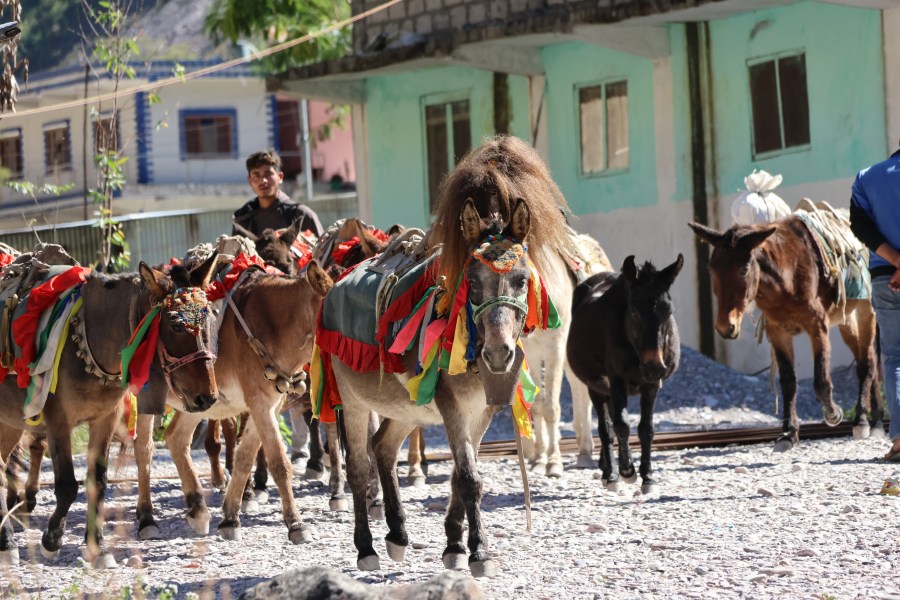
“It was such a privilege to witness the launch of our Gallop for Good project on the ground in Nepal, and to see the immediate benefits to the mules and their owners at the veterinary camp,” said Marianne.
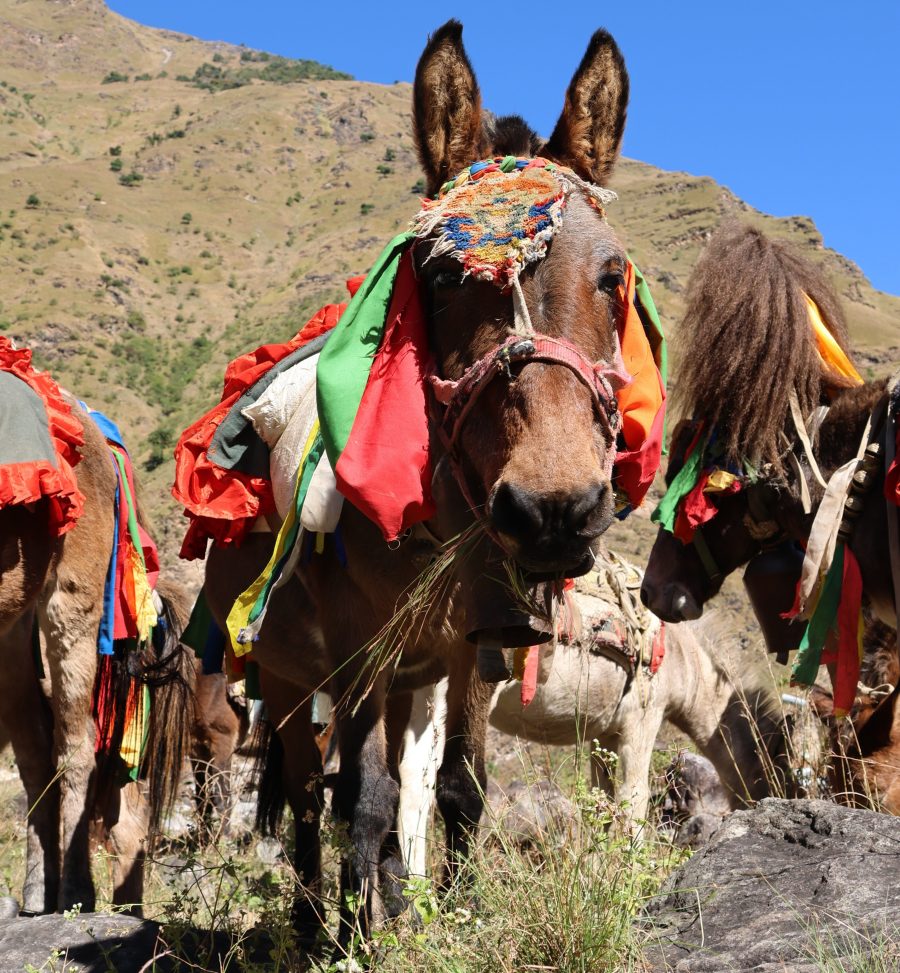
“Working mules make a vital contribution to the livelihoods of communities in Jajarkot, and many other regions of Nepal, where they are used to carry essential goods and materials across difficult terrain. They also play a critical role in disaster recovery, in rescue operations and the delivery of medical supplies in the immediate aftermath of an event, and for rebuilding and agricultural rehabilitation in the long-term.
“Through this project, The Donkey Sanctuary aims to demonstrate how the one welfare approach creates sustainable change for working mules, strengthening livelihoods and supporting environmental conservation.”
Images by The Donkey Sanctuary
More from Your Horse
- Jingle bell trot: The age-old link between horses and the sound of Christmas
- How to tell if a horse is happy: behaviourist reveals 13 key signs
- Winter hacking: How to stay safe and enjoy your rides through the colder months
- 5 ways regular schooling will benefit horses and riders who exclusively hack