
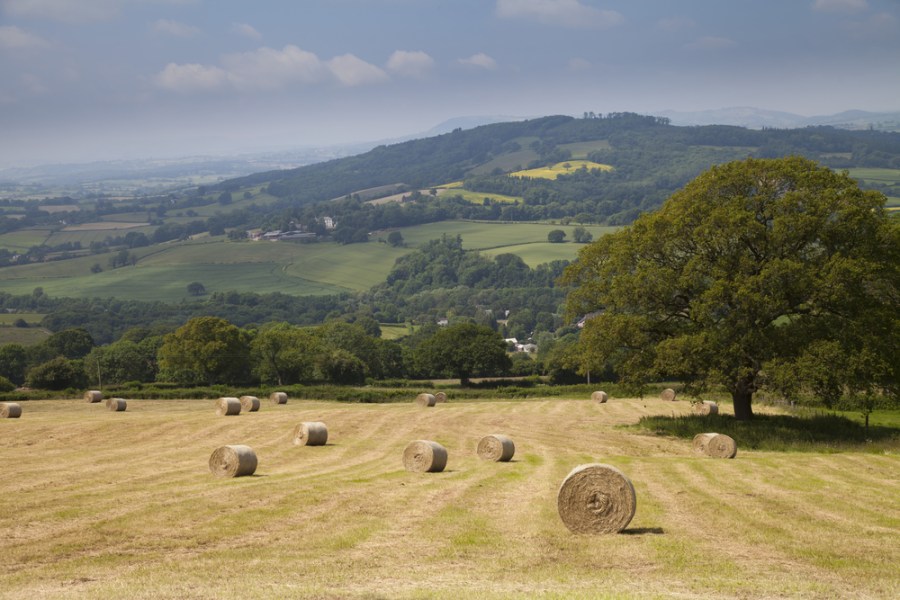
Horse owners across the UK are well aware of the difficulties many faced in sourcing and purchasing hay last winter, following lower than usual harvests in 2025, but with hot dry weather prevailing this summer, how are hay producers fairing and what might lie ahead for forage farmers and the customers they serve?
This week, The Environment Agency (EA) declared that more than half of England is in drought. Impacts are already being felt, including low river flows, high risk of wildfires and more than 20 million people under hosepipe bans.
The conditions are also impacting grass growth. Paddocks are parched in much of the country and many horse owners are supplementing their horses’ diets with more hay than they usually would at this time of year.
Farmers have reported similar struggles to last year, facing limited second cuts but also a lack of back-reserves of hay that they might have had access to in 2025.
Olly Morris of Thatcham-based OJM Farm and Equine reported such an issue.
“From a production point of view, it’s very varied across the country,” he told Your Horse. “But from our point of view, we’re in the area where the crops are definitely down. There’s no two ways about it.
“Last year we were probably 60% down on yield. This year I’d say we’re probably 30-35% down.
“I’ve got a guy in Cornwall and his second cut is nearly ready to go, but our second cuts are non existent, it’s literally brown. Further north and in Wales, it’s better weather and their second cut is pretty much ready to go.
“We’ve got more in stock this year than we did last year. But there’s no carryover from last year. There was a bit of carryover from the year before, but all that has gone because there was such a big demand. Everybody’s stocks have massively depleted.”
Demand for hay
Hampshire-based haymakers Blaber Enterprises painted a similar picture, with pleasing yields on much of their land earlier this year, but the dry weather now causing issues.
“We’ve got certain blocks of ground that are down 50-60% and others that are where they should be,” Ally Blaber told Your Horse. “So I suppose on a whole, as a company are down 20 to 30% on a normal year – about where we were last year.
“Last year we were able to buy in hay, we bought from Scotland, Ireland, Wales, Devon, Cornwall and France. But we’re not going to have that [backstock] available this year.
“We’ve already bought in a huge amount. We personally made a machine that unrolls round bales and makes them into the conventional bale which we are able to deliver and sell. But there’s a limit if you’re paying £70 for around bale, you only get 12 to 13 small bales out of it.
“It doesn’t take long to start doing the maths, that with three labour units rebaling 700 or 800 bales day, my cost is in excess of £7 or £8 a bale and that’s before I put it on a transit and run it out to somebody.”
A costly process
In terms of what lies ahead, both producers didn’t see costs coming down in the near future.
“It’s still early days to tell what’s going to happen,” said Olly. “But I don’t think prices are going to change that much at the moment going forward. The cost of it all is so expensive. That’s why we’re having to charge what we’re having to charge.
“The cost of the fuel has gone up, rents and wages have gone up as well. Production too, and I can’t see it’s going to be coming back down.”
Ally said farmers were not profiting from the situation, but breaking even buying in hay in order to keep serving their clients.
“Last year farmers were criticised for profiteering and stockpiling, but people need to realise that from bought in hay we earn no money,” he said. “It is difficult and tiresome. We are literally breaking even to retain market share to support our clients.
“We don’t allow ourselves to run out. We never intend to sell other people’s hay but we take on more and more land each year to look after our clients. 90% of the hay that we sell is our own, but in emergency situations like this, you just find it to keep everybody going.”
Mirroring last year
Demand for hay is higher than normal this time of year, and this is set to continue with short-term rain forecasts offering little relief for dried-out fields.
Ally has been sending out 1,000 bales a week from the end of July last year, and demand has continued since then with little let up.
“It’s a mirror image of last year and it’s unlikely to stop,” he said. “We look after a lot of big polo yards, and their season doesn’t start until end of May, June. If I buy in stock for them, I have to wait a long time to sell it. So that’s going to prove to be tricky again next year.”
Olly has had daily deliveries from his farm, and has had requests for hay from further afield.
“We’ve got deliveries that are going at all the time at the moment,” he said. “We’re getting calls as well from all over the country although we try and stay strictly within the 25 mile radius from our base.
“Straw seems to be all right so we’ve managed to pull the price of straw back a bit, at least that’s something back for the customer.”
What’s next?
“We are in changing times,” Olly continued. “I think people are expecting the high prices to suddenly drop back down to where they were years ago but unfortunately those days are long gone.
“I said to a lot of my clients last year, I’ll get everybody through as best as I can. It might not be the right size, it might be a round rather than a square bale, but at least I have something to feed.
“However, on the whole I’m quite positive with this year, more so than last year definitely,” added Olly. “We have plenty of stock and we’ve got some lovely hay as well.
“People have to be a bit realistic, suppliers to have to buy in, it’s it’s just the way it goes.”
Ally noted that horse owners may wish to consider including straw in their horses’ diets to help their hay supplies go further. This year he will have oat, barley and wheat straw available.
“Last year and this year I baled plenty of straw as I thought demand would take off, but to my knowledge I don’t have any customers who feed it regularly,” he added.
Information on helping your horse’s forage diet go further, feeding advice for this year’s hay, supplementing straw and more will follow next week on yourhorse.co.uk
Lead image © Shutterstock
Related content
- Hay vs haylage: this is how to choose which is best for your horse
- Soaking hay: how to do it correctly
- Crops down 50% in 2025: potential hay shortage raises concerns for horse owners
- Feeding a horse straw: why it has a place in their diet and how to feed it safely
- Forage replacers for every horse and pony *Ad feature*