
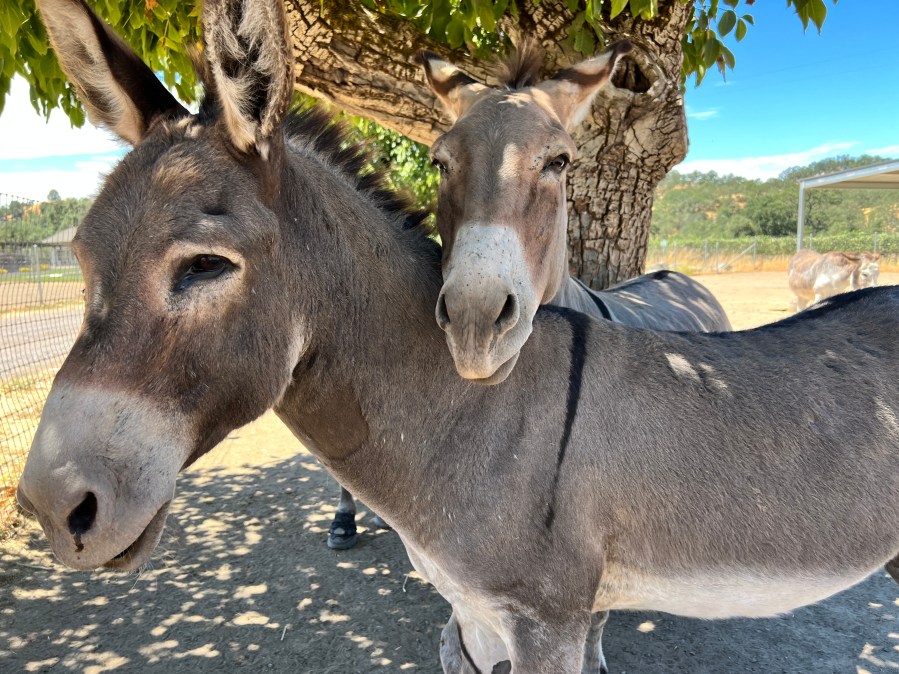
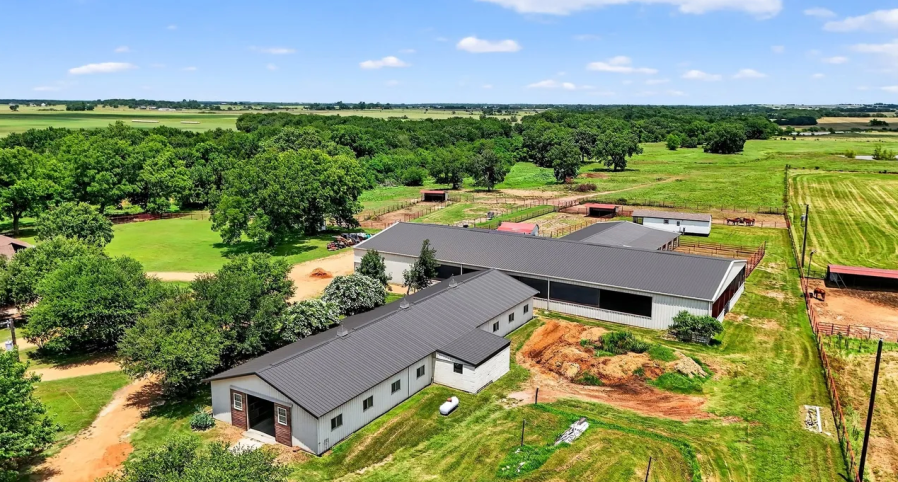
The US’s first specialised medical facility for donkeys is set to open next month in Grayson County in Texas.
The Center for the Advancement of Donkeys is a new initiative by Oscar’s Place, a donkey adoption and sanctuary in Hopland, California that has saved almost 500 donkeys destined for slaughter over the last five years.
Millions of donkeys around the world are slaughtered for their skin each year. Demand for donkey skin has increased significantly in recent years due to the popularity of ejiao, a gelatin product used in traditional Chinese medicine and commonly found in cosmetics, which is made by boiling donkey skin. In the US, many donkeys, including pregnant females, are sold at auction to “kill pen” buyers, who purchase them for slaughter and their hides.
The new hospital, which opens on Saturday 5 September, will provide early medical assessment and treatment near one of the largest donkey “kill pen” auctions in the US.
Health checks
“In nearly all cases, we don’t know the health status of the donkeys we are saving,” said Oscar’s Place co-founder and CEO Ron King.
“We may unknowingly save a donkey that is seriously ill, only to put it on a trailer for a 32-hour transport alongside healthy animals, putting in jeopardy the health of all the animals.
“This Center is the first of its kind and is built specifically to receive donkeys immediately, diagnose them accurately, and begin their recovery quickly.”
When the donkeys are healthy and fit to travel, they will be transported to the organisation’s adoption centre and sanctuary in Northern California.
Increased capacity
Currently, Oscar’s Place cares for nearly 160 donkeys at its adoption centre in Hopland, and has an additional 70 donkeys living at its sanctuary in Potter Valley. Once the new hospital opens it will allow the charity to house and care for up to 500 donkeys at a time.
Facilities at the Center for the Advancement of Donkeys will include a covered intake and assessment arena; temperature-controlled, bio-secure stalls; separate recovery housing for donkeys with strangles, asinine herpes, flu, and other contagious conditions; an on-site lab and pharmacy; an isolation ward for critical-care donkeys; and 40 acres of grazing with shelters, ponds and space for rehabilitation.
“We want the new facility to be more than a hospital; we want it to be the epicenter for collecting data, training veterinarians, and advancing the science of donkey medicine,” said Ron.
“We will continue our laser focus on rescuing and rehabilitating donkeys in need, but we are committed to investing in training the next generation of veterinarians.”
Training the next generation
The Center will also offer internships, externships and residency programmes to veterinary students and graduates as well as practising veterinarians. It is hoped that Oscar’s Place will expand its educational partnerships to include Texas-based veterinary schools.
“When we transform how donkeys are viewed and treated, we will improve the welfare of donkeys for decades to come,” said Ron.
“Our mission is clear: We want to help create a better world for donkeys. The Center for the Advancement of Donkeys will allow us to do more and do it better.”
Photo credit: Oscar’s Place.