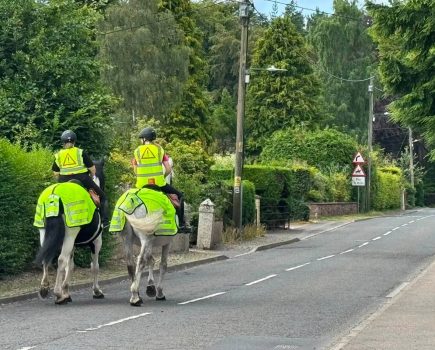

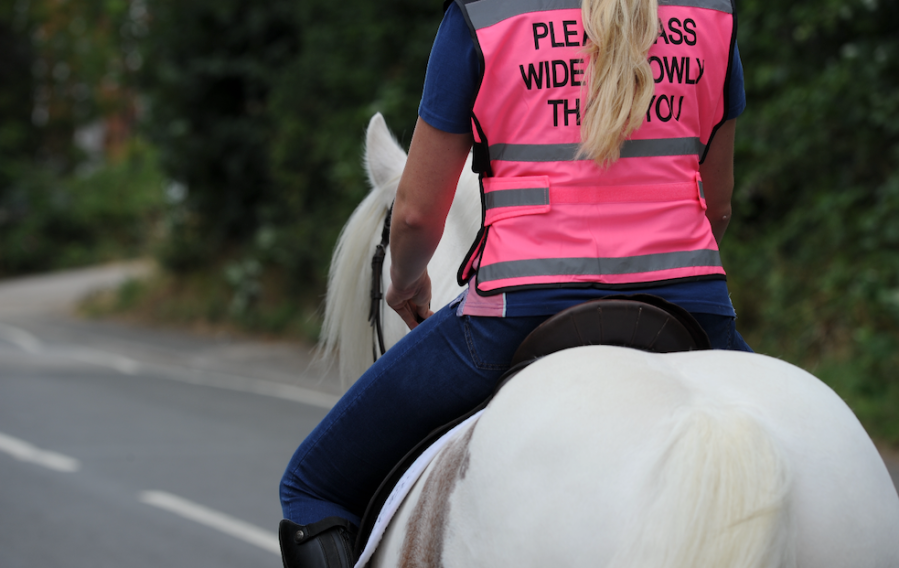
In a strongly supported debate in Westminster Hall, Members of Parliaments from across parties warned that current rules are failing rural communities, with riders left traumatised, horses destroyed at the roadside, and dangerous driving too often going unpunished.
MPs met yesterday (Wednesday 14 January) and the debate was opened by the MP for Newbury, Lee Dillon, who put forward the motion: ‘this House considers stricter road safety requirements for horses and riders’.
Mr Dillion, who secured the debate, has been instrumental in raising concerns about the safety of equestrians hacking on public roads. He told colleagues the discussion was “timely”, noting that the Government had published its new road safety strategy only last week.
The strategy states that every individual deserves to feel safe and supported on the nation’s roads, a principle Mr Dillion argued must apply more extensively to horses and riders.
“Unfortunately, for many horse riders across the country that aspiration doesn’t reflect their lived reality,” he said.
“Whilst the government strategy does reference horse riders alongside other vulnerable road users in some places, this is not consistent, and there is not specific mention of their safety.”
‘Just this morning a horse was hit’
Dr Danny Chambers, MP for Winchester, said that as an equine vet himself, road safety for horses is not a “niche issue”.
According to data from the British Horse Society, in 2024 there were 3,118 road incidents involving horses recorded, with 58 horses killed and a further 97 injured.
“It’s important to emphasise how significant this debate is,” said Mr Chambers. “As a horse vet I have stitched up and euthanised more horses than I can remember through my career that have been hit by cars.
“Just this morning, in my Winchester constituency in Hambleden, a horse was hit by a car and had to be euthanised. It’s not an unusual occurrence; I fully support the action in bringing this debate forward.”
Mr Dillon explained that horses are flight animals and can react unexpectedly, stating that the reasons for many incidents are due to drivers not passing horses in an appropriate manner.
“81% of incidents involving horses and vehicles occur because drivers pass too closely or too quickly. That’s why I have consistently campaigned for stronger protections for both horses and riders,” he stated.
A bill for change
In September, Mr Dillon launched a Presentation Bill — the Road Traffic (Horse and Rider Safety) Bill — which sets out mandatory speed and distance requirements for vehicles passing horses.
The Bill also proposes the inclusion of equestrian safety in driving theory tests.
He called on the Government to strengthen The Highway Code when passing horses and to improve driver education so that motorists understand horses’ behaviour and potentially the devastating consequences of their actions.
“These changes would raise awareness among all road users and provide greater safety and reassurance when horses are ridden, pulling horse-drawn vehicles or carriages,” said Mr Dillon.
He added that the government’s road safety strategy missed some “relatively straightforward” opportunities to better protect horses and riders.
“The strategy announced that the ministry of justice will consult on a new victims’ code. I welcome that commitment, but it raises an important issue.
“Under current law, horses are classed as personal property, meaning that when a horse is killed or fatally injured in a road traffic collision, compensation is largely limited to financial loss.
“The current legal framework restricts recognition of emotional distress, so I therefore urge the government to use the consultation on the new victims’ code to consider how riders and owners who lose horses can be properly recognised within that framework.”
Drivers less respectful of country roads
South West Norfolk MP Terry Jermy said he had heard firsthand accounts from international para showjumper Susi Rogers-Hartley.
In 2021, she was injured when a car passed too closely on a narrow lane, trapping her leg and dragging her along the road after the horse bolted.
In a separate incident, another horse she was riding was fatally struck from behind by a car.
Quoting the rider, Mr Jermy said: “The driver got an awareness course. I got a dead horse and thousands of pounds in vet bills.”
He added that riders often report little or no enforcement following incidents involving horses, warning that as cars have become bigger and faster, drivers have grown less respectful of country roads.
MPs also highlighted concerns about bridleways, stating that the Government needs to review the extent to which there is capacity to avoid the necessity of using roads.
Mr Dillon responded to say that years of cuts to council funding have left local authorities responsible for maintaining bridleways without adequate resources, forcing more riders onto the roads.
Equestrian representation in new strategy
Mr Dillon asked how the equestrian community would be represented within its new recommendations in the Government’s road safety strategy.
“The strategy also announces the establishment of a new National Road Safety Board, and given that horses and riders are among the most vulnerable off-road users, will the Minister commit to ensuring that an equestrian organisation, such as the British Horse Society, is included on that board?”
Lilian Greenwood, Minister for Local Transport, said in closing: “That’s yet to be considered. However, I think it’s an important point that we need to ensure we hear the voices of all road users as we undertake that work, and I will certainly take that point away.”
Positive steps were highlighted as already being taken by some authorities, pointing to an educational scheme in Leicestershire and Rutland that uses virtual reality to show drivers the experience of passing a vulnerable road user too closely.
Mr Dillon suggested the approach could be extended to improve motorists’ awareness of horse riders and rolled out nationally.
Dartmoor ponies killed
South West Devon MP Rebecca Smith raised the issue of Dartmoor ponies in her constituency.
“In Devon this issue is especially close to home. Dartmoor ponies [are] an iconic part of our landscape, roaming freely across unfenced moorland since the Bronze Age and frequently crossing roads within the national park,” she said.
“Having to deal with that is something you have to learn early on as a new driver. They are a symbol of our heritage, yet they are regularly injured or killed in collisions.
“Devon and Cornwall Police reported that 144 animals, including ponies, cattle and sheep, were killed on Dartmoor’s roads in 2024.”
The MP also noted that while local initiatives, such as improved signage and reflective collars, are welcome and make a difference, they cannot replace broader efforts to raise driver awareness and improve road safety.
Motoring offence penalties
Greg Smith, MP for Mid Buckinghamshire, emphasised that horse riding remains a vital part of rural life, deeply embedded in the culture, economy, and daily rhythms of local communities.
“Far from a niche pursuit, the British Equestrian Trade Association estimates that over 1.8 million people ride regularly, with around three million participating overall. For many rural communities, riding is a source of wellbeing, fitness, employment and social connection,” he said.
“Yet all of that is undermined when riders and their horses feel unsafe simply travelling on the road.”
Mr Smith acknowledged that a single death is one too many. While departmental data shows relatively few fatalities in recent years, serious incidents remain far too common.
He noted that the consultation on motoring offence penalties made no reference to equestrians.
“Dangerous driving that intimidates or endangers horses and riders must be taken seriously,” he said, adding that penalties should reflect the real risks posed by such behaviour.
Minister’s response
The Minister had little time to respond, given the strong support for the debate across the House. However, Lilian Greenwood acknowledged the distress caused by incidents involving horses.
“I recognise how horrible it must be to lose an animal in this way, and I want to stress the importance of keeping our roads safe for all road users,” she said.
The Minister highlighted the 2022 updates to The Highway Code, which introduced a hierarchy of road users and strengthened guidance on safe passing distances and speeds when overtaking horse riders.
“Those who can cause the greatest harm in the event of a collision bear the greatest responsibility to reduce the potential threat they pose to others,” she said.
“I’d obviously encourage everyone in the country, especially drivers, to look at the rules about animals in The Highway Code.”
‘It sent a shiver down my spine’
The Minister described the statistics showing horses killed or injured on roads as “completely unacceptable” and said the government’s new road safety strategy demonstrates that it is “not only listening but leading to build a safer future for all road users, including horse riders”.
She also committed to exploring further measures to improve guidance for drivers and riders and praised innovative schemes aimed at raising awareness.
“I was very pleased to hear about the VR headsets in use in Leicestershire. I absolutely agree that understanding what a frightening experience a close pass can be is really valuable.
“I saw a video produced by Cycling UK on close passes on social media just yesterday, and frankly it sent a shiver down my spine.”
Main image © Your Horse Library
Related content
- MP asks Parliament to prioritise horse and rider road safety
- ‘Let’s make sure everyone gets home safely’: Police team up with BHS to crack down on dangerous driving
- ‘To be respected you have to be respectful’: Andrew Hoy shares road safety wisdom
- Operation Snap: how to report a riding incident to the police