
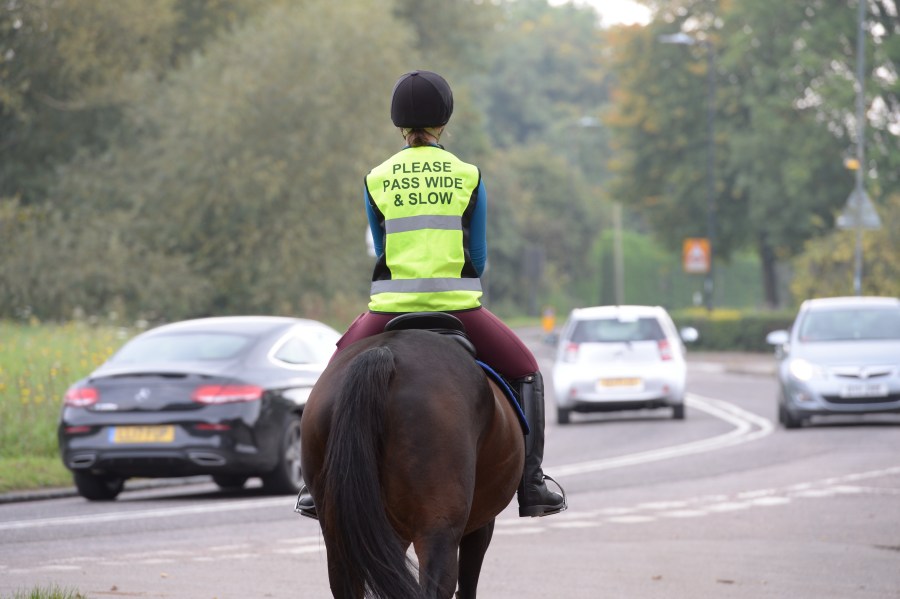
Over the years, I’ve represented numerous horse riders whose lives have been devastated by serious, often unavoidable, road collisions while hacking — sustaining life-threatening injuries and psychological trauma.
Life-threatening situations are not rare — they are a daily reality for riders. That is why it is essential that the Government introduces stronger measures to improve public safety and reduce risks for horses and riders on UK roads.
Beyond my legal work, I’ve worked with the British Horse Society for several years, delivering road safety talks. I also serve as a trustee of the Mark Davies Injured Riders Fund, a charity providing vital support to riders affected by horse-related injuries.
Behind every statistic is a person
On 14 January 2026, Mr Lee Dillon MP secured a parliamentary debate calling for stronger protection for riders and their horses on the road, including making some of the rules in The Highway Code relating to overtaking horses mandatory rather than advisory.
This is of particular importance when the data shows that 81% of incidents and near misses involve a vehicle passing too fast or too close to a horse.
I was proud to share with Mr Dillon my concerns, thoughts and proposals for change, which he then raised in parliament during the debate.
He is also championing the Private Members Bill — The Road Traffic (Horse and Rider Safety) Bill.
The Government’s recently announced Road Safety Strategy aims to cut road deaths and serious injuries by 65% over the next decade but misses key opportunities to better protect horses and riders.
According to the British Horse Society, in 2024 alone, 3,118 road incidents involving horses were recorded, with 80 people injured and 58 horses killed.
Behind every statistic is a person, a family and a beloved animal. These proposed changes will not eliminate collisions, but go some way to reducing what should be preventable tragedies.
Why this matters — my perspective
This debate is close to my heart. As a former horse owner and rider, I regularly used public roads to access bridleways around Leeds — often single carriageways with 60mph limits.
I experienced frequent near-misses, either vehicles passing too closely or too quickly, sometimes with oncoming traffic approaching.
Even now, as an occasional rider, the prospect of riding on the road gives me considerable concern.
My children also rode for a time, and during supervised rides, I witnessed dangerous behaviour from drivers — overtaking too closely or pulling into the line of horses. These situations posed obvious risks to both the children and their leaders on foot.
The reality for riders
Despite the Government describing its Road Safety Strategy as taking decisive action to make our roads safer for everyone, it barely acknowledges horses.
There is no mention of tougher motoring-offence penalties, leaving serious doubts about how rider protections will be improved in practice.
Mr Dillion brought up my points in the debate, where I was able to highlight the psychological trauma riders experience, often feeling immense guilt and grief that the horse bore the impact of the collision.
Mr Dillion urged the Government to use the consultation on the new Victims’ Code to ensure riders and owners who lose horses are properly recognised in relation to the impact that the loss of a horse in these circumstances can have.
The human cost – what I see every day
I have represented riders after catastrophic collisions — cases where horses were hit from behind, fatally injured, and riders left with life-changing injuries.
Sophia Bradley, for example, was thrown across the carriageway and her horse, Ava, was put to sleep after being struck from behind by a car.
Common themes include:
- Drivers passing at excessive speeds or too closely.
- Motorists explaining they “did not see” the horse and rider — even on straight roads.
The psychological impact is profound, including flashbacks, nightmares, anxiety, and in many cases, riders giving up riding entirely or incurring extra costs to avoid roads.
I would urge the Government to listen to the debate and ensure that horse riding safety is properly considered as they push forward with their new proposals.
Simple changes will save lives, reduce suffering and make our roads safer for everyone.
So what now?
Although the second reading of the Rider and Road Safety Bill did not take place as scheduled on 16 January, I support the progression of the Bill which, if approved, will strengthen road safety protections for horses and riders by establishing clearer legal duties for motorists and embedding equestrian safety within driver education.
The proposals include statutory rules governing how motorists must approach and overtake horses on the road, such as specified passing speeds and minimum overtaking distances.
These measures are designed to address the increasing number of incidents involving horses being struck or frightened by vehicles travelling too fast or too close, helping to reduce the number of incidents occurring.
The Bill also requires equestrian safety guidance — currently contained within the Highway Code — to be formally incorporated into the driving theory test.
This would ensure new drivers receive consistent education on how to recognise and respond safely to horses on the road, enhancing safety for all road users.
Image © Your Horse Library
Related content
- ‘It breaks my heart she had such a cruel end’: Rider loses cherished mare in road collision
- ‘Just this morning a horse was hit’: Westminster debate hears urgent calls to protect riders on roads
- This is why wearing the colour red could play a part in safer hacking
- Report all road incidents to the BHS to make a real difference to horse and rider safety, says Alan Hiscox
- Could not wearing high vis leave horse riders liable in a road accident? Solicitor answers