Stable fires can spread in seconds, with devastating consequences, and are one of the greatest risks facing every yard. Do you have a plan in place to keep your horses and your yard safe? Chloe Grant explains why you need one and what it should look like in practice…
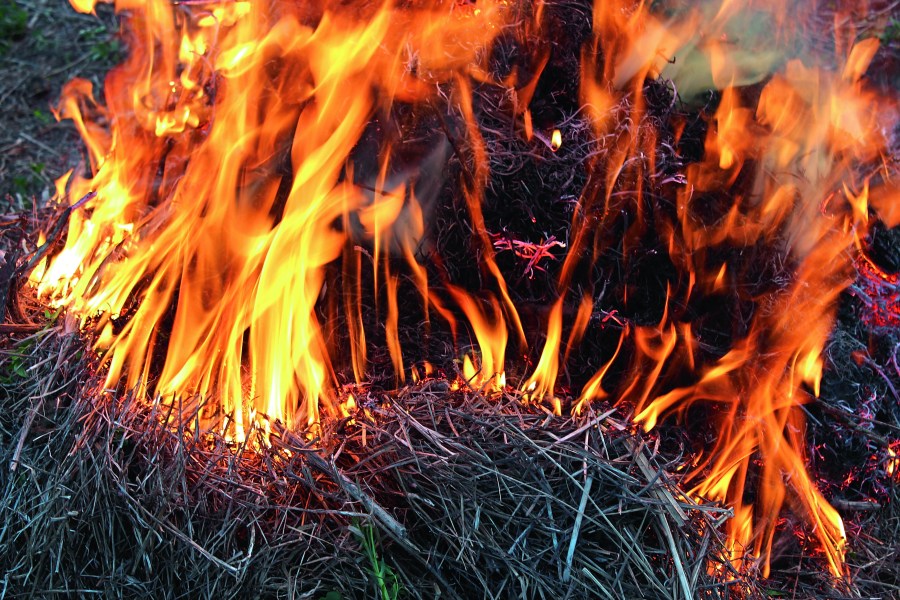
Fire is one of the most devastating risks that any equestrian yard can face. With flammable materials, electrical equipment, enclosed spaces and live animals all in close proximity, the potential for disaster is very real. Stable fires can spread with frightening speed, causing severe injury, loss of life and long-term damage to property and business continuity.
Whether you run a livery yard, riding school, private stable block or equestrian centre, fire safety should be part of your everyday thinking. And it pays for visitors of all yards to be fire-safety aware, too.
Fire safety isn’t a one-off task — it’s an ongoing commitment. By following good practice, complying with UK fire safety law and building simple habits into your daily routine, you can dramatically reduce the risk of fire and protect both people and horses. A safe yard is a well-managed yard. With clear planning, regular maintenance and a proactive approach, you can create an environment where everyone feels confident and protected.
Legal responsibilities
Under the Regulatory Reform (Fire Safety) Order 2005, all animal premises, including stables, must have a Fire Risk Assessment (FRA). If you own, manage or control the premises, you are legally the responsible person. This means you must ensure the FRA is completed by someone competent, that any significant findings are recorded and that appropriate fire-prevention measures are put in place.
You must also ensure evacuation routes both internally and externally are clear and safe, provide fire-safety training and maintain equipment, such as alarms, extinguishers and electrical systems. Failing to meet these duties can lead to prosecution or business closure and, more importantly, it puts the lives of people, horses and emergency responders at risk.
Hazard spotting
Make hazard spotting part of daily life. Stable yards contain many potential ignition and fuel sources, so hazard spotting should become second nature. Encourage employees, liveries and even regular visitors to report anything that looks unsafe. Recording these observations, even as a quick voice note, creates a useful paper trail and ensures issues are dealt with promptly.
Electrical systems
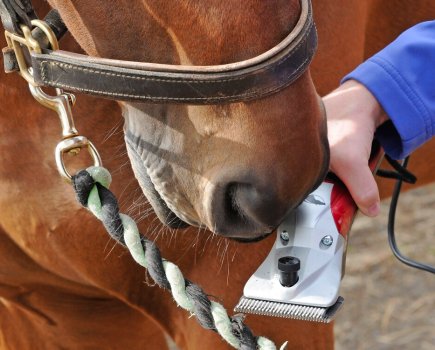
Electrical systems are one of the most common sources of ignition; damaged wiring, overloaded sockets, faulty equipment, such as clippers or portable heaters, can all spark a fire, as can machinery, such as tractors and quad bikes, which should be stored well away from stables.
Work areas for contractors
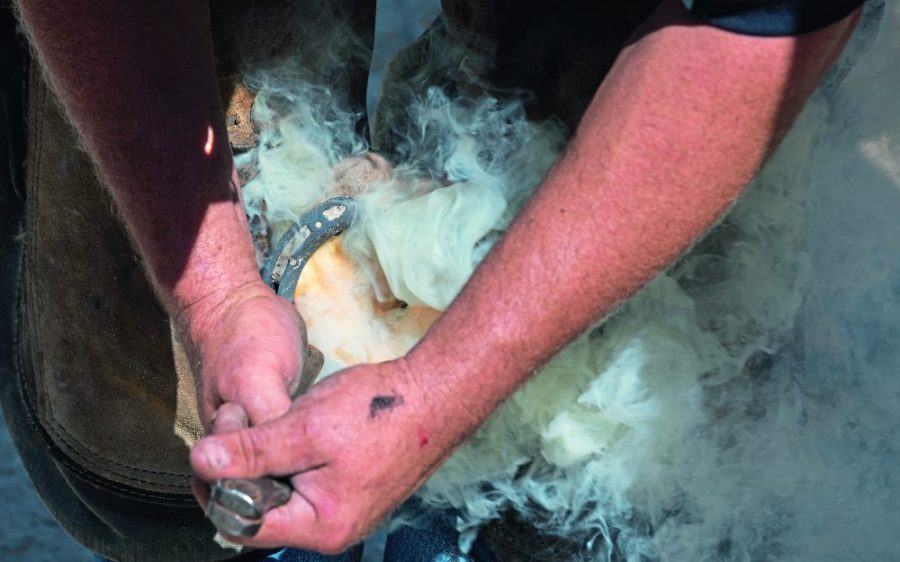
Contractors, including farriers and vets, must understand their responsibilities and use safe, well-maintained equipment. Where your farrier works needs careful thought, as sparks from grinders, heat from the forge and hot shoes can all ignite hay, bedding or waste if the area isn’t properly cleared.
Smoking
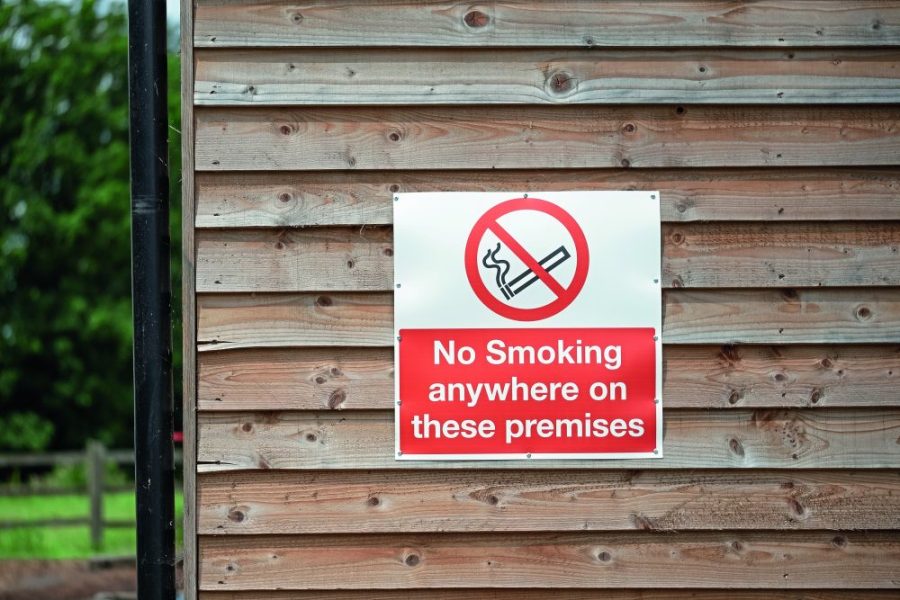
Smoking materials remain a major cause of fires. Cigarettes, lighters, matches and even vape chargers should be kept well away from stable areas. A strict no-smoking or vaping policy is essential and reinforcing it with clear signage and ensuring everyone on site understands the rules is crucial.
Hay
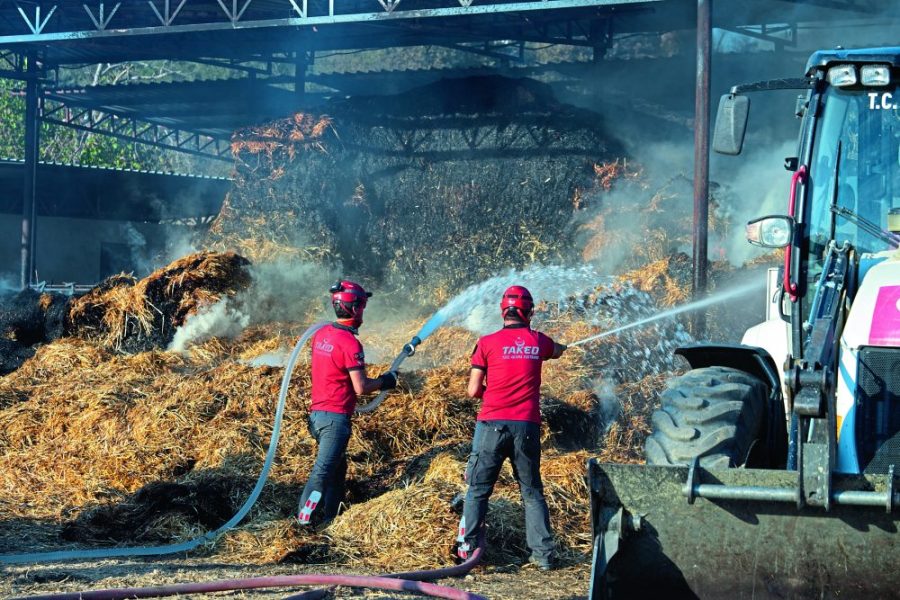
Fresh, damp hay is a hidden danger as it can build heat internally and spontaneously combust. Look out for signs that this could be happening. If hay feels unusually warm or appears to be steaming, it needs immediate attention and better ventilation.
Fuel sources
Fuel sources are everywhere on a yard and most are things you will come into contact with every day: hay, straw, shavings, wooden structures, rugs and tack, for example. Then there are gas cylinders, petrol, diesel, oils and cleaning chemicals — each has the potential to cause a fire. Older buildings may also contain asbestos, which poses additional risks if disturbed.
Horse evacuation plans
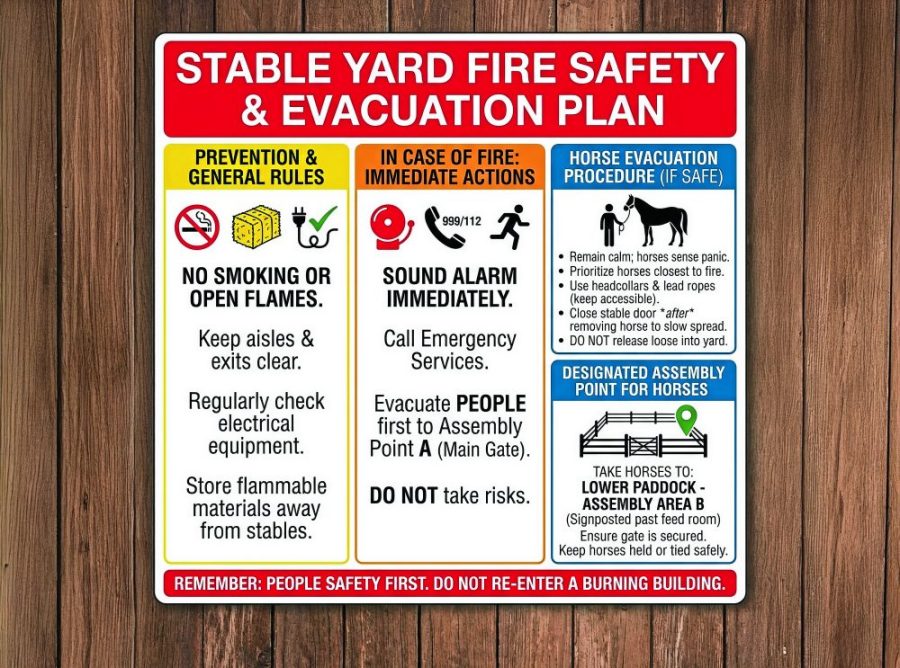
Evacuating horses during a fire is challenging, with smoke, noise and panic, making horses reluctant to move. Having a clear evacuation plan is vital.
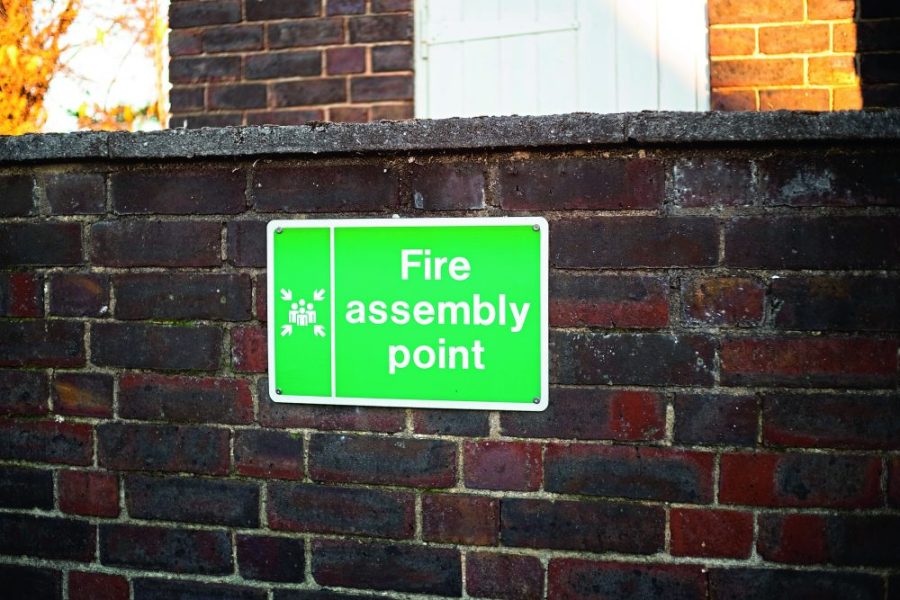
Identify a safe holding area well away from buildings and make sure it is always accessible. Keep headcollars and lead ropes at every stable door, so they can be grabbed quickly.
An emergency plan should be displayed clearly around the yard. Everyone should know how to raise the alarm, who will call the fire service and what the evacuation steps are. Running a dry drill, even without horses, helps employees understand their roles and highlights any weak points in the plan.
As an extra measure, why not invite the local fire service to conduct a site visit to enable them to familiarise themselves with the area and how to access yards and open stable doors.
Tell everyone
Ultimately, fire-safety precautions and evacuation processes only work when everyone on site understands them. New employees should receive induction training and refresher sessions should be held annually. Practical extinguisher training is invaluable, as is clear guidance for lone workers.
In addition, ensure new liveries and all horse owners and riders on site are familiar with the evacuation procedure. Remember to update all parties should any changes occur on site.
Essential equipment
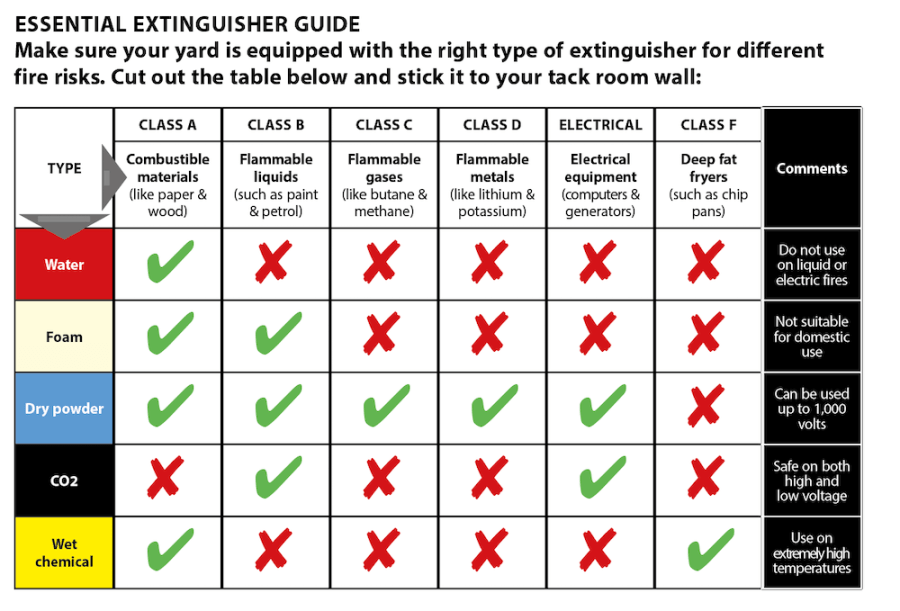
> Heat detectors, alarms and extinguishers (see table, above) are essential tools in any fire-safety plan.
> Alarms should be installed in tack rooms, feed rooms and personnel areas. They must be loud enough to be heard across the site and all parties should be familiar with the alarm sound — this is one of the benefits of having regular fire drills.
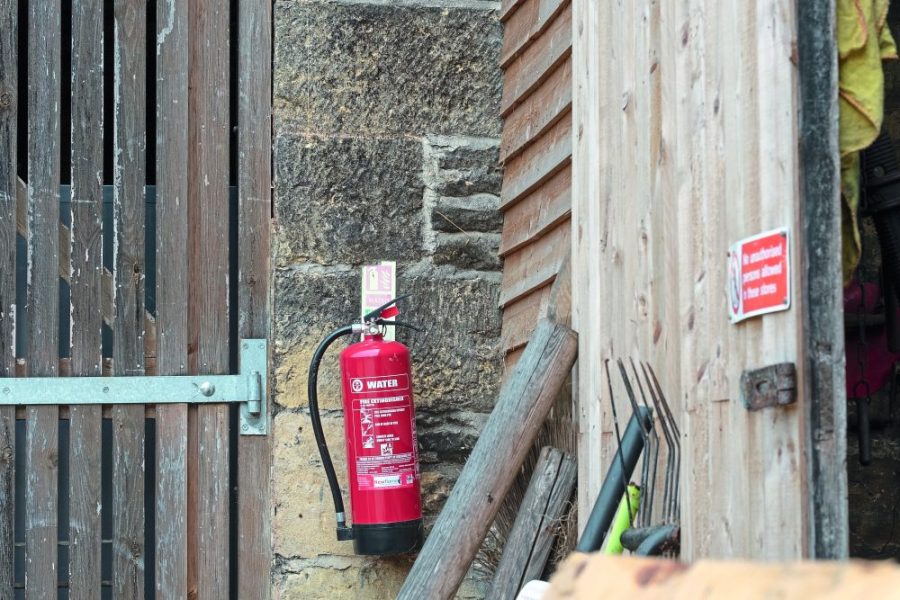
> Fire blankets should be available in kitchens or welfare areas. All firefighting equipment must be mounted correctly either on a wall in an easy-to-access area or in a robust unit on the floor. It should be checked regularly by a competent in-house person, as well as annually by a competent professional. Weekly checks of fire equipment should include inspecting tack rooms, feed rooms and storage areas, as well as monthly fire extinguisher and alarm inspections to ensure they are operating correctly.
Safety starts with awareness
Fire safety in the equestrian environment is all about awareness, consistency and teamwork. By building simple habits into your daily routine, staying alert to hazards and ensuring everyone on site understands their role, you can create a safer environment for your horses and your community. A proactive approach today could prevent a devastating incident tomorrow — and that peace of mind is worth every effort.
Meet the expert
Chloe Grant is health, safety and compliance consultant at CRG Rural Ltd and has extensive experience in the agriculture and equestrian sectors. Chloe lives in Lincolnshire with her husband Calum, a farrier, and she understands the everyday risks faced by members of the equestrian and agricultural communities. Follow her on Instagram (@crg_rural and @chloeg.crg) or visit crgrural.com. For a comprehensive site visit or help with creating your own fire safety plan, email [email protected].
Your Horse is a leading equestrian brand trusted by millions of people around the globe who have one thing in common: they all love horses. Through its website, monthly magazine and social media channels, Your Horse informs and entertains horse owners, riders and enthusiasts who want to do their very best for their horses.
The perfect Christmas gift
Pay only £24.99 for an entire year of Your Horse, saving up to 67%!