
Every horse owner is concerned about colic, a potentially life-threatening condition. Here Emmeline Hannelly, a Welfare Education Officer at the British Horse Society (BHS), explains all about colic and how to use the charity’s REACT campaign in order to spot early symptoms.
REACT to colic
REACT stands for:
R – Restless or agitated
E – Eating less or droppings reduced
A – Abdominal pain
C – Clinical changes
T – Tired or lethargic
Within each of these categories, there are further signs that you can look out for.
Often the signs of colic can be subtle, so it might just be something that seems out of the ordinary for your horse. Maybe they are lying down more often than usual. Anything that makes you think they’re doing something outside of their normal behaviour should make you think.
Horse owners tend to think of the well-known symptoms of colic and wait until they see these appear, but this wastes time and could be the difference between the horse surviving or not.
In terms of clinical changes, the biggest thing for your horse’s health is knowing what his baseline measurements are.
Clinical changes include:
- Increased heart rate
- Reduced or absent gut sounds
- Changes in the colour of gums
- Rapid breathing rate
- Skin abrasions over the eyes
Skin abrasions are an indication that there’s a problem, for example, if you notice them after your horse has been in the stable overnight, it could be that he’s had colic overnight and has been thrashing around in the stable and caught himself over his eye.
It’s good to become familiar with your horse’s normal heart rate. Measuring his heart rate regularly will help you become accustomed to what’s usual for him and can also help your vet too.
Always ensure you take his heart rate when he’s relaxed and at rest, rather than straight after exercise when it might be elevated.
What to do while waiting for the vet
There’s a big myth that you shouldn’t allow your horse to roll if you suspect colic as it could cause a twisted gut. The University of Nottingham hasen’t found any evidence to suggest that this might be true and allowing your horse to roll doesn’t cause a twisted gut.
The best thing to consider is safety. If your horse is in his stable, thrashing around in pain, don’t go in there with him as you put yourself at risk. Call your vet as soon as you can.
If your horse is up and standing quietly, it can be best to put him in a quiet area while you’re waiting for your vet. If he’s in severe pain and trying to get down and roll (and it’s safe for you to do so) put your horse in a safe area – such as a well-bedded stable or arena.
Don’t let your horse go loose if you take him into an arena. If you take him into an arena and he’s in significant pain, gentle walking for 15-20 minutes can help and won’t harm him.
Should you decide to put your horse in the stable, while you’re waiting for the vet, be sure to remove any buckets or objects from your stable that your horse could hurt himself on if he’s thrashing about in pain.
The REACT campaign
The campaign has been really positive. We’ve also had fantastic feedback from vets, owners and trainers who have found the information we provide really useful.
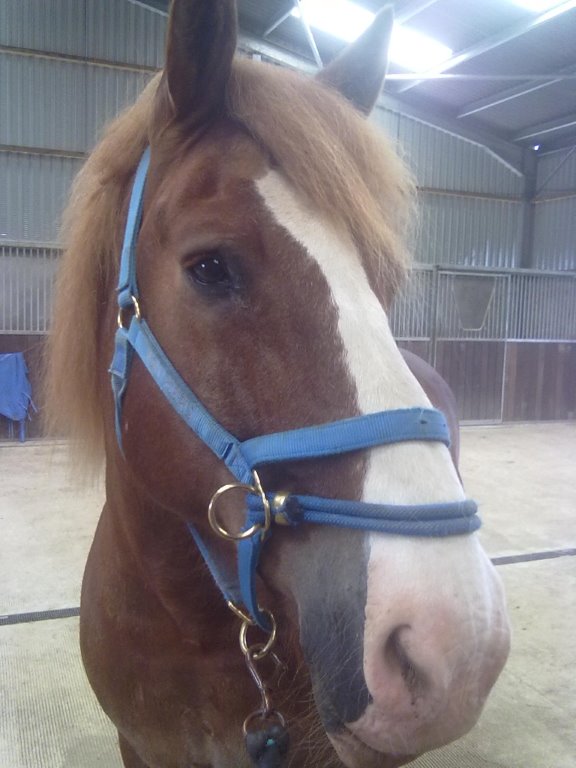
Just this week, we were sent an email from a horse owner whose horse, Axon, had unfortunately suffered from colic.
She’d ordered one of our colic packs previously and learnt to look out for the subtle signs that her horse wasn’t right.
She said that if it wasn’t for the pack, she probably wouldn’t have considered him seeming not quite right as colic and not got a vet to him in time.
Visit the BHS dedicated REACT website for more videos and downloadable leaflets.