
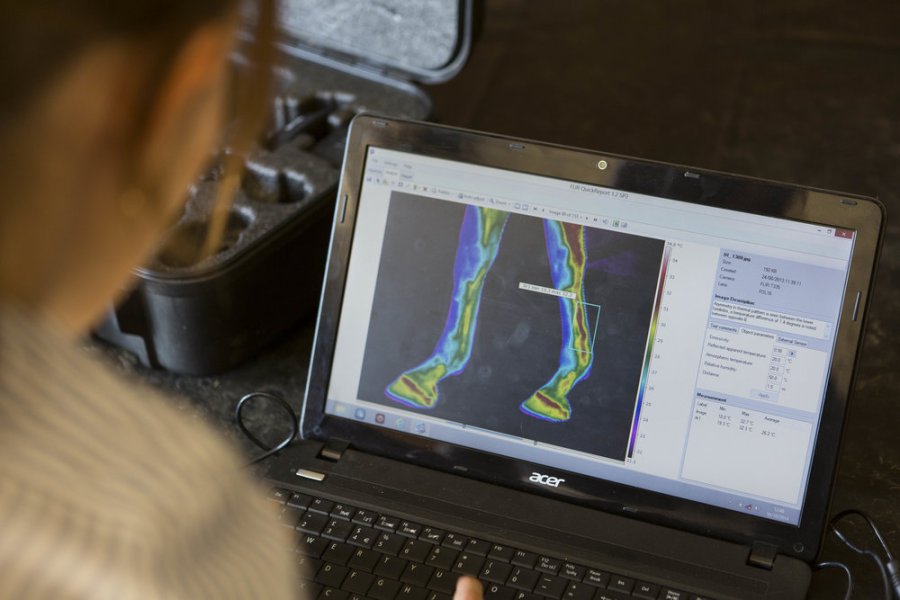
Artificial intelligence (AI) might sound like something from a tech lab, not a stable yard, but vets, researchers and even the military say it’s already transforming how we monitor horses.
At this year’s National Equine Forum (NEF) on 5 March, speakers revealed how AI is helping catch health problems earlier, understand horses’ needs more clearly, and give owners and carers information they’ve never had before.
And crucially, the experts were unanimous: AI won’t replace the horseman’s eye – it simply fills in the gaps when we can’t be there.
The session included expert insight from Dr Liz Cresswell MRCVS, veterinary lead of Vet Vision AI, Pip Young, a PhD student at Bristol Veterinary School, Major Graham Harvey MRCVS of the Royal Army Veterinary Corps and jHubMed scout and project lead and Professor Sarah Freeman FRCVS, a professor of veterinary surgery at the University of Nottingham.
24/7 eyes on horses: what AI is actually doing
Dr Cresswell opened the session by explaining how AI is used in cattle to analyse behaviour and welfare around the clock, and why horses could benefit in exactly the same way.
“We can teach AI algorithms what these different behaviours look like on a camera,” she said. “It gives us very objective 24/7, 365‑day data into how our animals are living.”
AI isn’t guessing – it’s recognising patterns that humans can miss. And while artificial intelligence won’t muck out or spot a loose shoe, it can monitor feeding, resting, and activity with a degree of accuracy impossible for a person on a busy yard.
Spotting pain earlier – before it’s obvious to us
One of the most striking demonstrations came from Professor Freeman, who showed video of a horse quietly colicking.
To humans, the horse appeared fine when approached, with its head over the door and ears pricked. But as soon as the groom walked away, the footage showed repeated flank‑watching and lying‑down‑getting‑up behaviour.
“Horses can conceal signs of pain and distress,” Professor Freeman said. “AI helps us understand what a horse’s life is truly like.”
Her team analyses millions of images a day and has already identified:
- Horses with chronic sleep deprivation.
- Individuals with reduced eating time before an episode of colic.
- Welfare impacts of management changes, feed types and even vaccinations.
In one case, AI revealed that horses showed a dramatic drop in sleeping while lying down after a strangles vaccination. As a result, the yard now gives bute alongside the jab.
“The vets would not have been aware of the impact on the horses’ lying times,” Professor Freeman explained. “All of the horses now receive bute as a result of what we learned.”
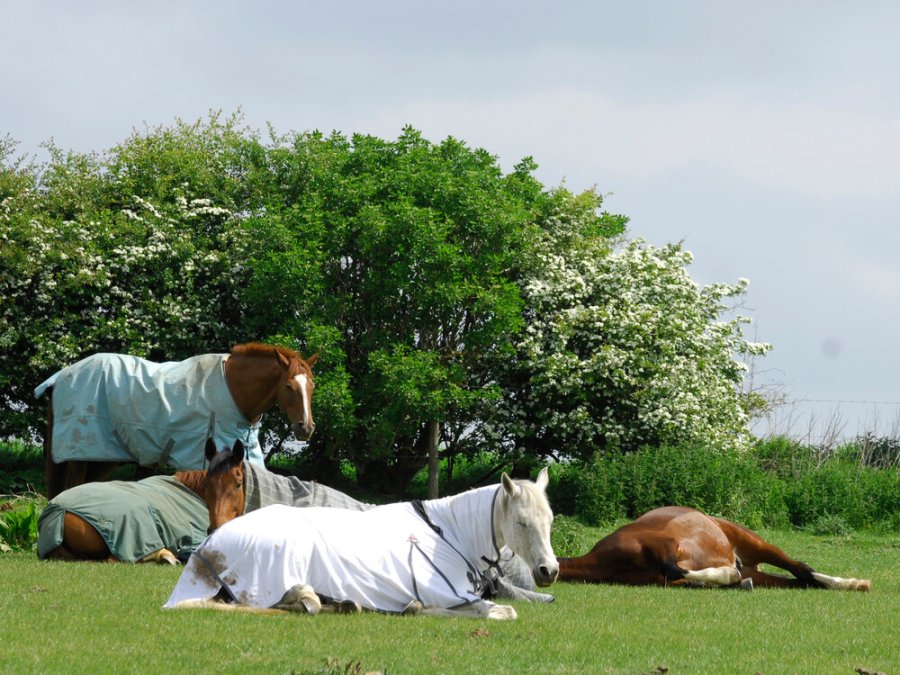
Military working horses move into the future
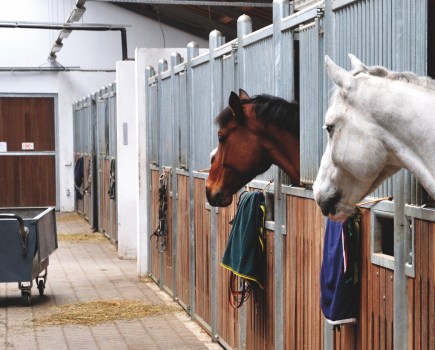
Major Graham Harvey of the Royal Army Veterinary Corps described how AI cameras have been installed in stables across London’s military horse units, known as Project Forboss.
The benefits, he said, have been immediate.
“We want earlier veterinary intervention,” he stated. “When you engage early, you can treat much faster.”
Project Forboss is now using AI to:
- Track eating, drinking, urination and lying down behaviours.
- Identify periods when horses fail to lie down at all.
- Flag early signs of health problems before staff would spot them.
- Analyse which bedding types result in more deep rest.
One image showed a horse that had not slept in 24 hours – something staff would have had no way of knowing in the past.
Another graph revealed that younger horses spend more time lying down than older ones, and that straw or woodchip tended to allow deeper rest than other beddings.
“We’ve been able to start addressing issues we simply wouldn’t have known about before,” Major Harvey said.
The big questions: is AI going to replace horsemanship?
The panel was clear in its answer to whether AI would ever replace horsemanship: absolutely not.
“AI should remain a tool to offer supportive evidence,” said researcher Pip Young. “Humans and their experience should remain involved when making a decision or a diagnosis.”
Experts warned that:
- Training AI tools requires high‑quality, unbiased data.
- Owners must avoid over‑reliance.
- AI cannot replace intuition, fieldcraft, or good management.
But they stressed that AI can spot patterns we never could, such as a horse that eats slightly less in the 48 hours before colic, or one whose rest pattern shifts due to stress, pain or environment.
“I’m not looking for a perfect system. It just needs to be 1% better than the current system. And it already is,” said Major Harvey.
What’s next? Foaling prediction, pasture monitoring and more
The future uses of AI are already on the horizon:
- Foaling prediction looks promising: horses often show tiny behavioural shifts hours before they foal, which AI can detect reliably.
- Pasture monitoring will take more time due to trees, lighting and power, but researchers are already exploring it.
- Lameness detection remains a challenge – not because of the technology, but because vets and owners disagree on lameness grading, making training data inconsistent.
But the direction of travel is clear: more insight, not less and more welfare benefits, not fewer.
What horse owners should take away
AI won’t tell you how to ride a half‑pass, boot your horse for turnout, or spot that “something’s not quite right” look we all know so well. But it could:
- Help fill in the hours when horses aren’t supervised.
- Catch the subtle signs before a problem escalates.
- Give objective data to support management decisions.
- Help owners tailor care to each individual horse.
Professor Freeman summed it up by saying: “AI is allowing us to make evidence‑based decisions rather than guesses, and make positive differences to health and wellbeing.”
As every horse owner knows, the more we can understand what’s happening when we’re not in the stable, the better we can care for the horses we love.
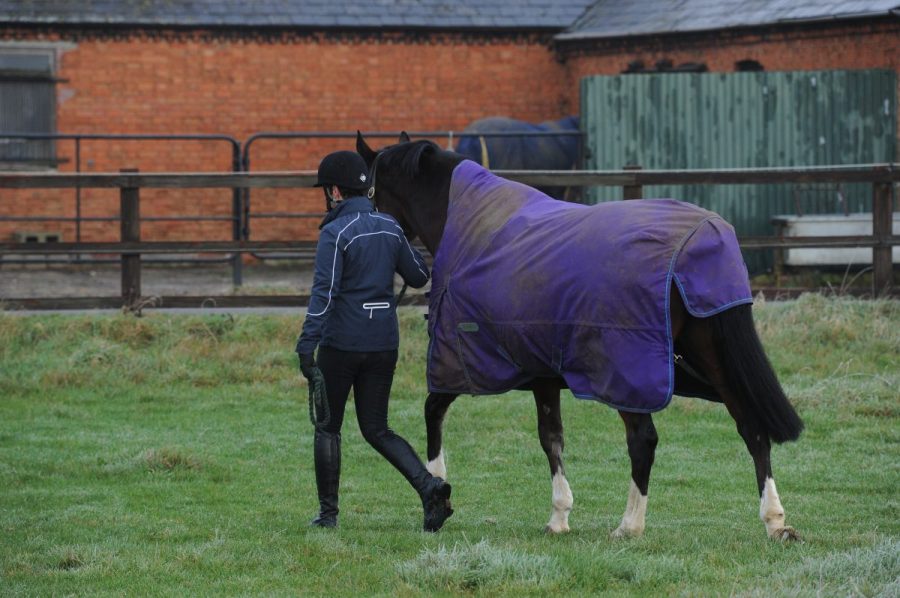
Seeing the invisible: how AI reveals what horses hide
Professor Freeman showcased some of the most powerful evidence of AI’s potential, especially regarding pain and sleep.
“Horses conceal signs of pain and distress,” she said. “But AI helps us understand what a horse’s life is truly like.”
Her team analyses up to seven million images every 24 hours across military sites alone, and more than 230 million images over a standard 30‑day monitoring period.
They’re already seeing breakthroughs, such as a chronically sleep‑deprived horse experiencing mini‑collapse episodes is now receiving tailored management changes. While another example came during a strangles vaccination programme, when AI revealed that horses’ lying times dropped dramatically – information humans would never have known.
“The vets were aware of the injection site reactions,” Professor Freeman explained. “But they would not have been aware of the impact on the horses’ lying times. All of the horses now receive bute with this vaccination as a result.”
What AI will – and won’t – replace
While enthusiasm was high, the panel reiterated that AI complements expertise rather than replacing it.
“AI should remain a tool to offer supportive evidence,” Pip emphasised. “Humans and their experience should remain involved when making a decision or a diagnosis.”
Professor Freeman echoed that sentiment: “You need the sceptics, the cautious, and the adventurous. All of those voices make sure we go in the right direction.”
Major Harvey said: “I’m not looking for a perfect system. It just needs to be 1% better than the current system. And it already is.”
All members of the panel agreed that if a human can recognise a pattern, an AI can be trained to do the same – and often more consistently.
Professor Freeman stated: “Every day is a school day. AI is allowing us to make evidence‑based decisions rather than guesses, and make positive differences to health and wellbeing.”