
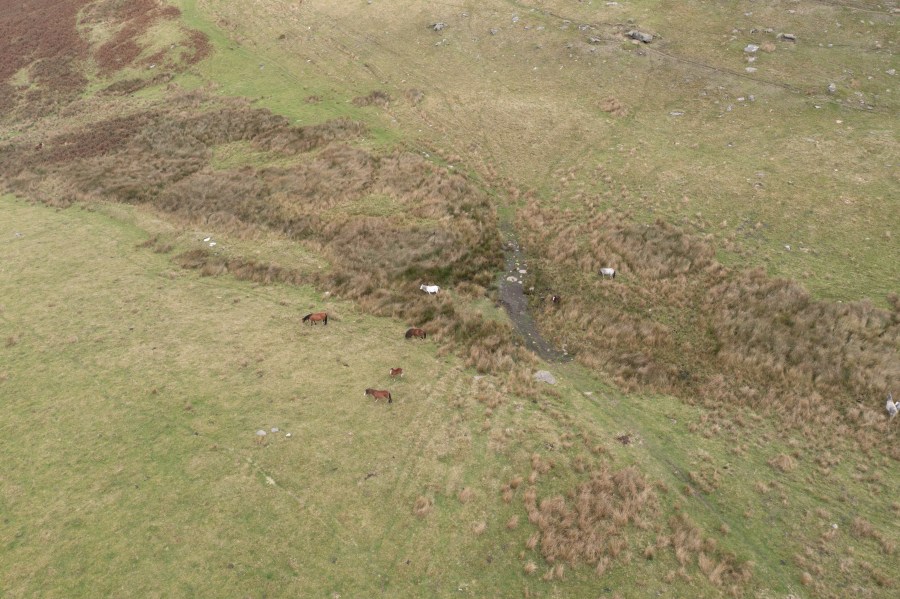
In a UK first, equine charity World Horse Welfare used technology to carry out a head count of the vulnerable ponies who live on Gelligaer and Merthyr Common in Southeast Wales.
By using drones, six World Horse Welfare staff members with the help of volunteers from local organisation Hungry Herds, were able to determine the overall population size of the herd is 182.
The headcount forms part of a major collaborative project between World Horse Welfare, the Gelligaer and Merthyr Commoners Association, Redwings Horse Sanctuary and RSPCA who are working together to develop a long-term management plan for the semi-feral ponies.
“We had to cover an area of 3,000 hectares during daylight hours on a single day to ensure we could capture all the main herds as well as smaller satellite groups and not risk double counting,” explains World Horse Welfare’s chief field officer Claire Gordon.
“On the day, where visibility and the terrain allowed, the team were able to use binoculars to see that some areas clearly had no ponies, so a total of 30 flights were carried out, rather than the 48 originally planned.
‘Challenging task’
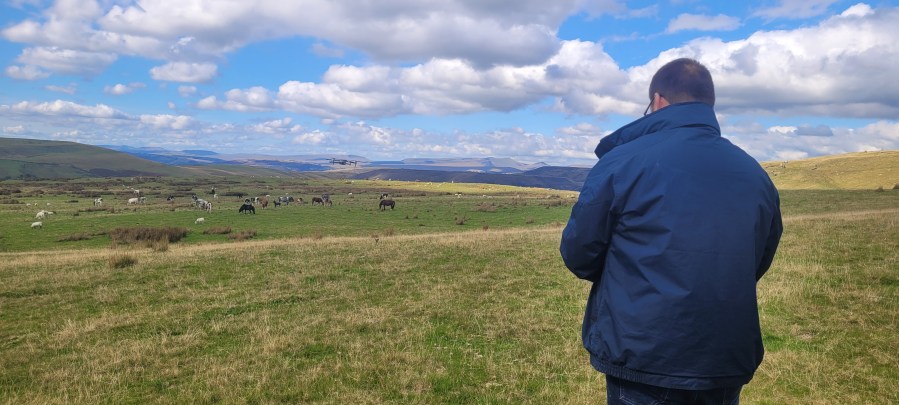
“Given the scale of the common and how well the ponies blend into their environment, it is a truly challenging task to carry out an accurate headcount and we’re delighted with how it went.”
The team mapped the common and captured photographic records of all ponies seen on the day and then reviewed the data to ensure there was no double counting.
“Having worked to help the ponies of Gelligaer and Merthyr Common for over 20 years, we know how quickly the herds can move, how well they can hide in inclement weather, and how difficult it is to get to large areas on the common; and therefore how difficult it can be to get a true picture of the numbers,” said Nic de Brauwere, Redwings head of welfare and behaviour.
“We are very grateful to Hungry Herds for their support with this operation, which is a key milestone in our work towards a long-term future for the ponies where they can have happy and healthy lives on the common.”
Unchecked breeding
Commons like Gelligaer are put under increasing pressure each year due to the unchecked breeding of abandoned and unowned horses and ponies, and the sheer numbers in the herds, who are competing for food and water alongside other livestock.
“The drone count, the first of its kind on the commons, has enabled the organisations working on the project to get an accurate headcount,” said RSPCA head vet (equine) Roxane Kirton.
“This is a crucial stage which will inform decisions on how to relieve population pressures in ways that best support the welfare needs of the ponies.
“The quality of the drone footage allows us not only to know overall numbers, but also the proportions of foals and youngsters in the group. Regular monitoring of population size and dynamics like this is incredibly important in order for us to make good decisions in population management and understand the impact of our interventions so far.”
For more information about the project, click here.
Images © World Horse Welfare.