
A horse’s ears are like emotional radar dishes — constantly moving, finely tuned, and incredibly expressive. Long before a tail swish or a hoof stamps the ground, those ears are already telling a story.
From pricked sharply forward in curiosity to pinned flat in irritation, the position and movement of a horse’s ears can reveal subtle shifts in mood, focus, comfort, and even pain.
With an impressive range of motion and the ability to swivel almost 180 degrees, a horse uses their ears not only to listen, but to communicate.
Learning to read these signals can deepen your understanding of horse behaviour, improve handling and riding safety, and strengthen the partnership between you.
Below is a summary of what some of the common horse ear positions are and what they mean.
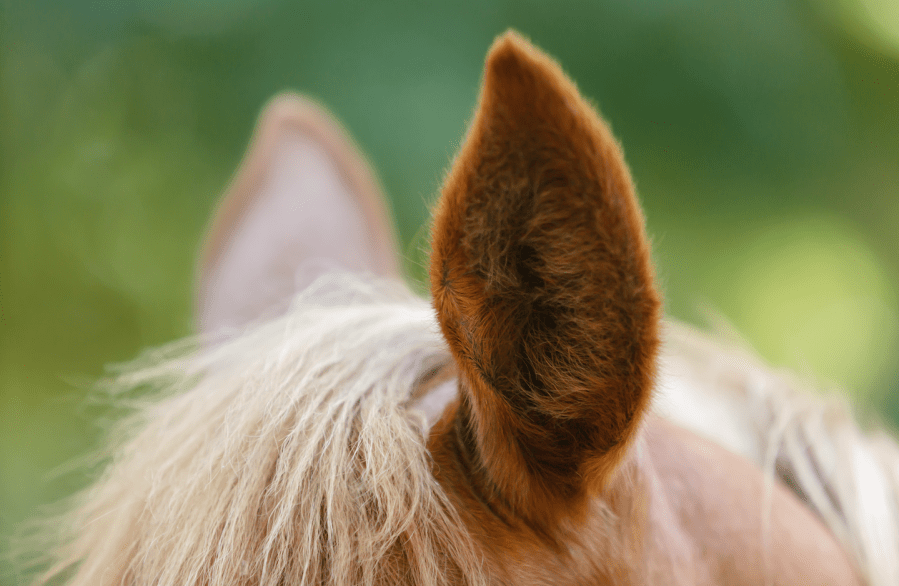
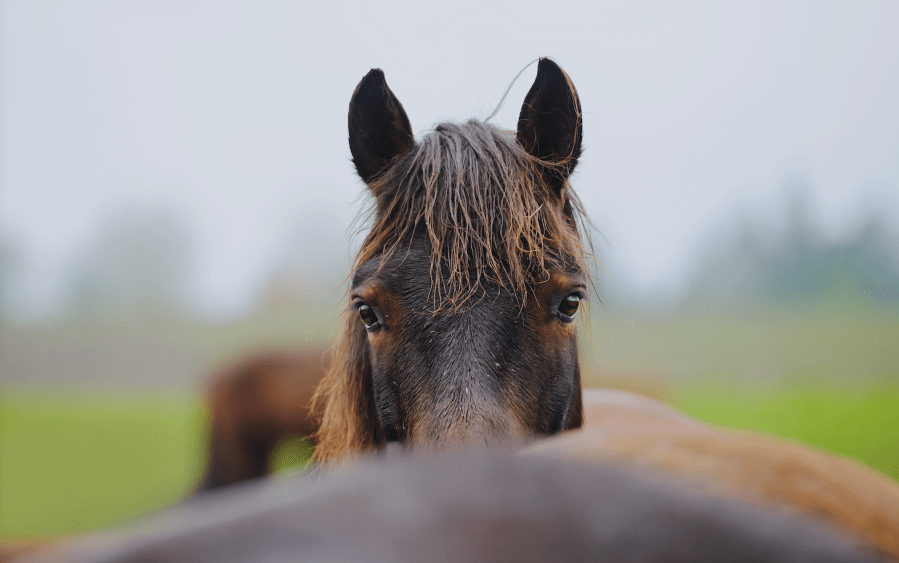
Ears pricked forwards
When a horse’s ears are pricked forward, it usually means they are alert, attentive, and interested in something ahead of them.
This position allows them to focus both their hearing and vision on a particular object, sound, or movement. You’ll often see ears sharply forward when a horse is curious, assessing a new environment, or concentrating on a jump, obstacle, or approaching person.
It’s generally a positive sign of engagement, though the rest of the horse’s body language should always be considered for the full picture.
Once their curiosity has been satisfied, the ears will relax.
One ear turned backwards
When a horse has one ear turned backwards and the other forward, it usually means they’re dividing their attention between two things.
Often, the backward ear is tuned in to the rider, handler, or something happening behind them, while the forward ear remains focused on what’s ahead.
This split-ear position is a great example of just how independently a horse can move each ear, and it’s commonly seen when a horse is working under saddle or listening for instructions.
In most cases, it signals attentiveness rather than tension — a horse that is engaged and processing their surroundings.
Flicking ears back and forth
When a horse flicks their ears back and forth, they’re usually scanning their surroundings and processing multiple sounds or stimuli at once.
You’ll notice a horse doing it regularly when being ridden — I always think it is a good indicator of how well they are listening to you.
This rapid ear movement can indicate curiosity, alertness, or even mild agitation as the horse tries to decide where to focus.
Watching the rest of the horse’s body language alongside the ear flicks helps you understand whether they’re simply attentive or starting to feel uneasy about something.
Ears turned to the side
When a horse’s ears are turned to the side in a droopy, relaxed way, it often signals relaxation or casual awareness of their surroundings. The horse isn’t fully focused on anything in particular, but is still aware of what’s happening nearby.
This ear position is common when a horse is grazing, resting, or calmly observing other horses or people around them.
Alternatively, you may notice the ears turned to the side in a sharper, more abrupt way, giving the impression that the horse is on high alert and concerned about something. Their neck may be up with head raised, too.
My horse did this with his ears when the had a hornet flying around his back end. I didn’t see the hornet at first, but I could tell from his expression that something was wrong, so I went to help.
It really pays to be able to read your horse’s body language, including ear positions, and it becomes easier the more time you spend with them.
Ears back
When a horse has its ears pinned flat back against its head, it usually signals anger, fear, irritation, or discomfort. This is a warning posture that the horse may be ready to defend itself or is unhappy with something nearby.
While context matters — ears back during a relaxed stretch may differ, for example — flattened ears are generally a sign to give the horse space and pay close attention to their body language.
It’s also important to note that horses will put their ears back to listen to something behind them too. You can tell the difference, because angry ears will be pinned flat back with a wrinkled nose adding to what is easily recognisable as a very cross face.
My advice is to take heed and stay away!
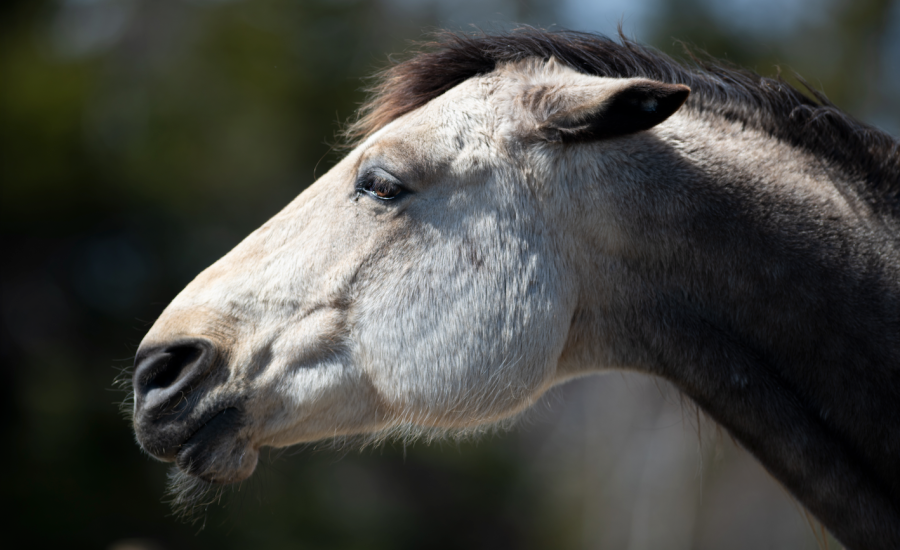
Don’t forget the eyes…
A horse’s eyes are a core part of their facial language and great mood indicators too. A stressed horse often has their ears turned back, and this tension can show in their eyes.
Horses under stress may develop deep wrinkles on their upper eyelids as their eyes constantly scan their surroundings.
While some eye wrinkles are normal, their number, depth, and shape vary between horses, so knowing what’s typical for your horse helps you spot early signs of stress.
A horse about to react explosively or frozen with fear may not blink, while pain, illness, or low mood can appear as a dull, vacant stare.
Remember, a horse communicates with their whole body — the eyes, ears, and posture all work together to signal how they’re feeling at the moment — and all riders/owners have a duty to listen.
All images © Shutterstock