

For children and adults alike, the sound of twinkling bells is synonymous with Christmas. Evoking thoughts of Santa and festive magic, it’s a noise we all enjoy to hear as the big day draws close.
However, what many of us may not realise is that these tuneful bells were once most closely associated with horses and the sleighs they pulled during snowy winter months.
Before jingle bells were added to Christmassy tunes, adverts and festive toys, they had a much more practical purpose, serving as an important warning that a horse-drawn vehicle was approaching.
A bit like the historic version of high-vis, the bells attached to sleigh harnesses to let other highway users know an equine was on its way.
The metal bells were an audible warning to pedestrians on icy or snowy roads, preventing collisions with the otherwise silently gliding sleighs. What’s more, the type of bells also gave an indication of the type of horse or horses that were approaching.
The brighter the sound, the more horses were pulling the sleigh. Wealthier households even used bells to show social status, with different tones and arrangements signalling the size and speed of the team.
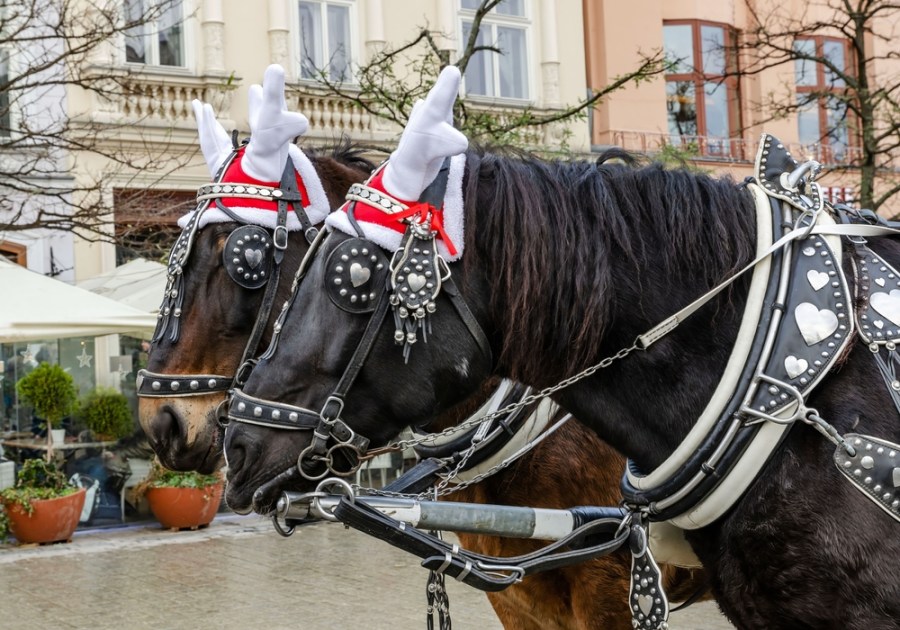
The sound of Christmas
With this horsey connection, we’re sure most equestrians would be very excited to hear bright bells on an evening walk, knowing the arrival of a group of dashing steeds would soon follow.
Over time, the cheerful sound of bells became linked with winter travel, and eventually with Christmas itself. By the Victorian era, the association was so strong that the bells were adopted for festive music, carolling and Christmas decorations.
“Most people think of jingle bells as a Christmas decoration, but they were originally a safety tool for horses,” explains Barbara Wrathall of riding clothing and equipment retailer Discount Equestrian.
“Sleighs move silently, so bells were essential for preventing accidents. It’s fascinating how something so practical ended up becoming one of the most recognisable sounds of Christmas.”
Jingle bells
In fact, the song Jingle Bells wasn’t actually written for Christmas either. It began as a winter celebration piece about sleigh racing in the 1850s, but because the public already associated bells with snowy horse-drawn travel, it gradually became absorbed into Christmas tradition.
Bells can also be linked back to pagan and early Christian traditions, where they were used to summon people to worship, ward-off evil spirits, and announce important events, but we imagine for most horse lovers, this equine connection is a little more memorable and special.
Images © Shutterstock