
See your four-legged partner in a whole new light with these fascinating facts about your horse’s body. With expert insight from equine anatomy and biomechanics specialist Russell Guire, we explore the remarkable design features that make horses such extraordinary athletes, from their panoramic vision to the immense forces travelling through their limbs over a fence.
Whether you’re schooling on the flat, hacking out or tackling a course of jumps, understanding how your horse’s body works can transform the way you train and care for them. Read on to discover what makes your horse tick — and why those quirks at the yard might actually be clever adaptations at work.
1. Huge field of vision
The horse has the largest eyes of all land mammals, and their position on the side of their head means they have a panoramic field of vision of nearly nearly 360°. There are two blind spots: directly in front of their nose and directly behind them.
Horses also have one flight eye and one processing eye. You’ll often see a horse tilting their head at a strange object in their field of vision — this means they are looking at something and processing what they can see.
This also helps explain why on one rein your horse won’t notice an object in the school, but may spook or shy on the opposite rein, as their vision on each rein sends a different message to the brain.
Interesting, right?
2. Are they left or right hooved?
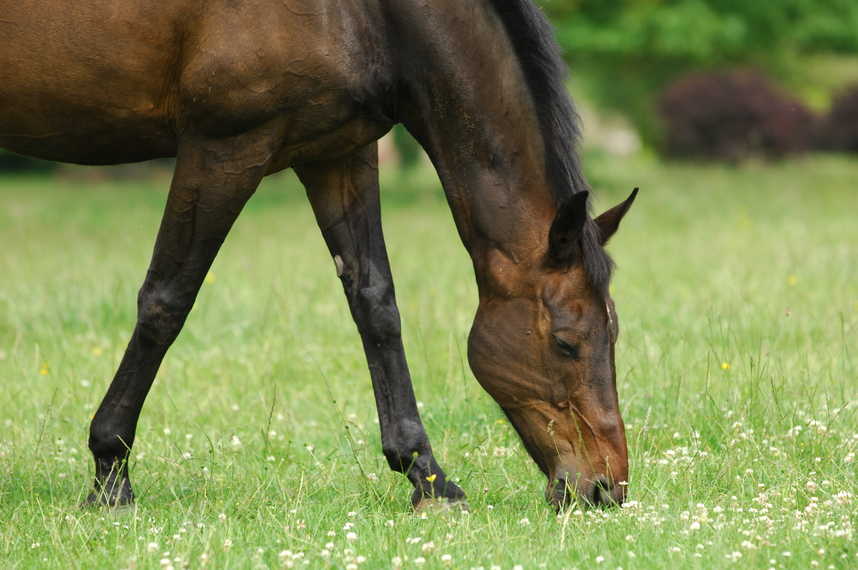
From birth, horses are either left or right hooved, in the same way that a person is either left or right handed.
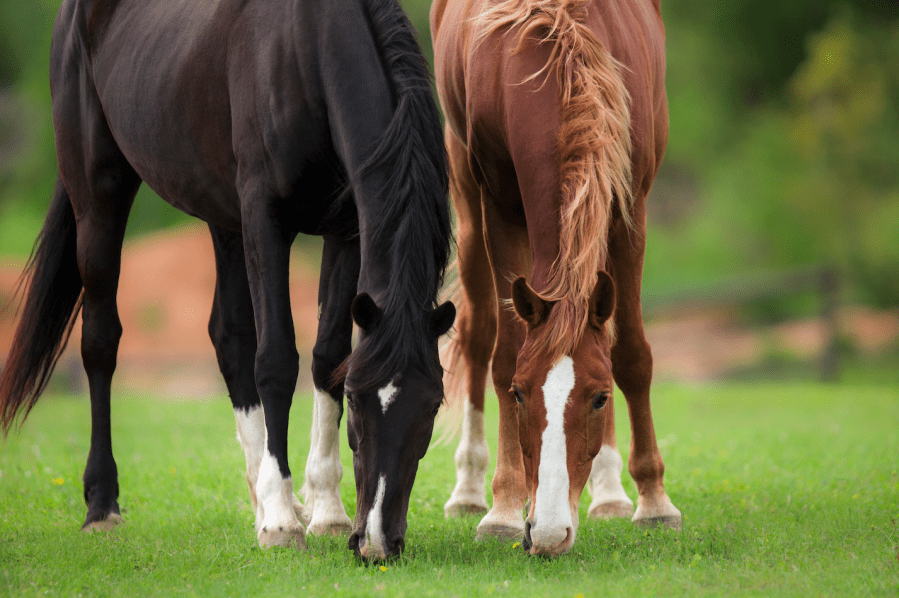
When you watch your horse grazing, they will graze with one foot out in front and this can be an indicator of whether they favour the left or right.
Often referred to as laterality, this is the preference your horse shows for one side of their body. Being aware of this will help you use the correct training exercises to help strengthen their weaker side.
Favoring one side to the other can cause asymmetry, altering hoof shape and scapular position. This is why regular visits from a farrier and having the fit of your saddle checked at least twice a year are essential to ensure your horse stays sound.
If this doesn’t happen, it may result in uneven feet and uneven loading patterns which, over time and if not corrected, will cause weakness and soundness issues.
3. They don’t have a collarbone

Unlike us, horses don’t have a collarbone. Instead, they have a powerful group of muscles, tendons and ligaments called the thoracic sling, between the shoulder blades and the sternum/ribcage.
Its role is a bit like a hammock, suspending the ribcage from the shoulder blades (scapula) and supporting the horse’s weight.
The thoracic sling acts as a shock absorber and it’s this that enables the horse to carry out dressage movements and jump. If horses had a collarbone they’d struggle to jump or carry a rider.
4. The force of landing from a fence
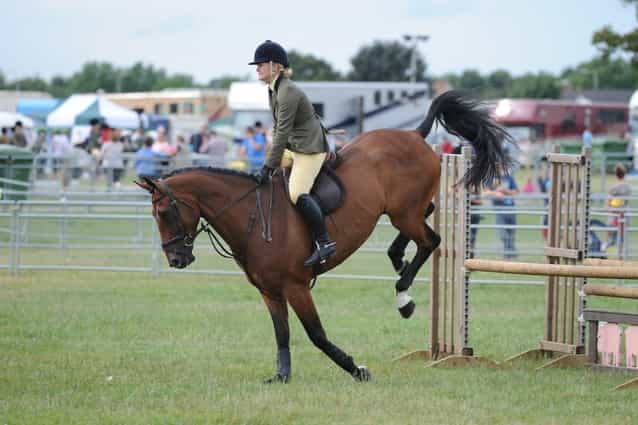
When a horse jumps a 1.30m fence, 2.6 times their bodyweight passes through the first landing foreleg.
As they land, the fetlock hyperextends and touches the ground, causing the tendons and ligaments to stretch like a large elastic band.
This load passes into the fetlock, acting like a huge spring propelling the horse forwards.
5. They are super sensitive
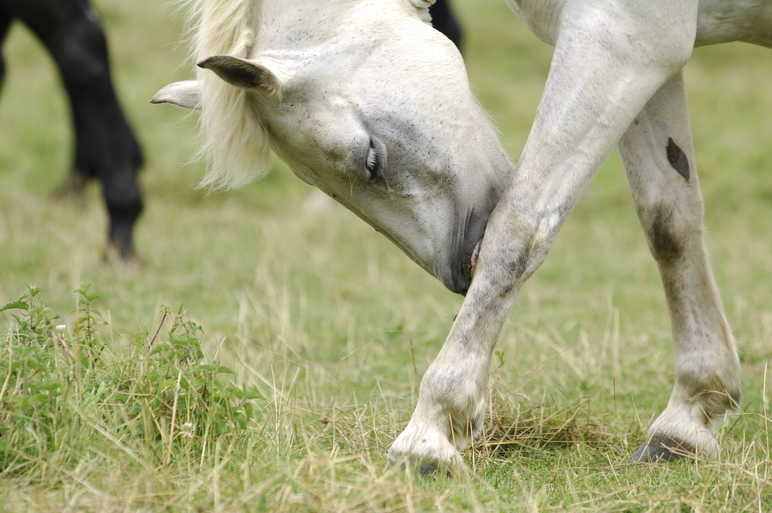
A horse is so sensitive to touch that they can feel a fly land on them — so why do some horses become unreactive to the rider’s leg?
Horses have a great ability to switch off, and this is what happens if you continually apply a leg aid. Eventually, your horse will become dull to your requests.
6. Horses cannot be sick (vomit)

Horses are physically unable to be sick (vomit) because of the way their digestive system is designed. The muscular valve at the entrance to the stomach — the cardiac sphincter — is exceptionally strong and forms a very tight one-way seal.
In addition, the angle at which the oesophagus enters the stomach and the position of the stomach deep within the ribcage make reverse flow almost impossible.
Even when pressure builds in the stomach, the anatomy simply doesn’t allow contents to travel back up the oesophagus.
This inability to vomit is one reason colic can be so serious in horses. If gas, fluid or feed builds up in the stomach or intestines, it can’t be relieved by vomiting as it might be in other species, leading to severe pain.
Any signs of abdominal discomfort — pawing, rolling, looking at the flank or loss of appetite — should always be treated as urgent and assessed by a vet promptly.
Images © Shutterstock & Your Horse Library