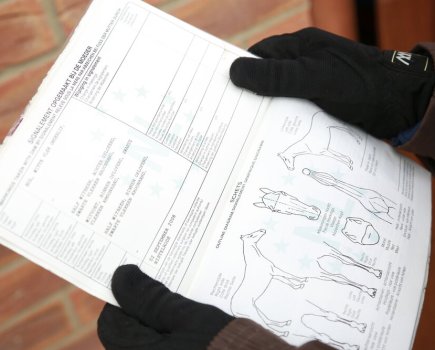

Pre‑purchase examinations (PPEs) – or “vettings” – have long been a pillar of the horse‑buying process. But according to a panel of leading vets and industry professionals at the 2026 National Equine Forum (NEF) on 5 March, the system is under unprecedented strain.
Expectations have shifted, litigation fears have risen, and horses – and humans – are increasingly caught in the cross‑fire.
During a frank discussion Dr Sam Cutts MRCVS, director of Hook Norton Veterinary Group, Dr Mark Georgetti MRCVS, clinical director of Three Counties Equine Hospital, Dr Lucy Grieve MRCVS, veterinary projects officer of the British Equine Veterinary Association, and dealer Julia Martin delved deep into what’s going wrong, why it’s happening, and what must change.
Vetting: a snapshot, not a guarantee
“Vetting is a risk assessment – not a warranty, not a guarantee,” stressed vet Lucy Grieve. “It’s a snapshot in one day, and it’s a living creature you’re looking at.”
Lucy said buyers increasingly expect certainty rather than context, equating the vetting process with a pass/fail exam. But horses cannot be distilled into black and white results.
“People expect more from vettings than is possible,” she added. “There’s been an expectation drift.”
The myth of pass or fail
Every vet on the panel agreed – the industry’s obsession with the idea of “passing” or “failing” a horse is at the root of many problems.
Vet Sam Cutts explained: “A vetting is suitable or not suitable for the purpose described — but people interpret that as pass and fail.”
Sam went further, emphasising that vettings are opinions, not verdicts.
“It literally says ‘in my opinion’ at the end of the certificate. You could show the same horse to three experienced vets and get three different opinions.”
Buyers want perfection – but it doesn’t exist
Dealer Julia Martin, who has sold horses for nearly 40 years, says the desire for flawless horses – especially from inexperienced amateur buyers – is “destroying the market”.
“People want perfect. There is no perfect,” she explained. “Years ago, one in 10 horses would fail. Now two in 10 will pass.”
According to Julia, older horses, which are often the safest for amateurs, are now being routinely rejected for normal wear and tear.
“We are writing off too many horses,” she said. “And the people who need the older, safe horses are walking away because they want perfection.”
Litigation fear: the silent force behind tougher vettings
Sam revealed that half of all veterinary indemnity claims stem from vettings, and that fear permeates the process.
“These days if someone buys a horse and it doesn’t work out, it’s somebody’s fault – and if it’s not the seller’s fault, then it’s my fault,” stated Sam.
Lucy Grieve agreed, saying the pressure has driven many young vets away from PPEs altogether.
“These are the cases that keep you awake at night – not for a couple of days, but for weeks or months.”
One young vet, Julia recalled, was even followed home by an angry purchaser and left the profession altogether.
Why vets don’t always agree
Vet Mark Georgetti said differing opinions are inevitable, rooted in:
- Differing risk tolerance.
- Personal experience.
- Differing interpretations of X‑rays.
- Varying understanding of the horse’s intended use.
- Differing knowledge of the rider’s true ability.
“A horse might be fine to stay at its current level, but not if you want to move it up three levels. That’s a different conclusion about the same horse,” Sam explained.
Mark noted that vettings are far easier when the vet already knows the purchaser.
“It’s easier to assess a slightly lame horse when you know the rider, the home vet, and the management it’ll receive,” he explained.
The hidden variable: rider ability
A horse that vets sound may still unravel with a different rider – something vettings cannot predict.
“A horse can look perfect under a professional and fall apart under a less experienced rider,” said Lucy. “Fitness, symmetry, tension – riders influence all of it.”
Jullia agreed saying: “The horse will tell you. If its ears are pricked and it wants to work – great. But a new rider can change everything.”
The rise of X‑rays – and how they could be making things worse
Radiographs are now routine, but the panel agreed they often complicate vettings rather than clarify them.
“X‑rays create more questions than answers,” said Mark, noting the vast differences in interpretation.
As for gait analysis as a tool? Not one vet on the panel supported its use in PPEs.
“All horses have asymmetry. You will always find something,” said Mark.
Julia added: “I’ve lost sales because of gait analysis. Clinically the horse was sound – then the machine said otherwise.”
A system at breaking point
Julia said buyers now regularly undergo three or four vettings before finding a horse, each costing up to £1,500.
“People are giving up buying horses. It’s too stressful,” she stated.
For sellers, delays can mean weeks of lost time, during which they must keep the horse, turn away other buyers and risk the horse developing a new issue simply by existing.
“It’s costing £200 a week to keep a horse. You can’t wait three weeks for a vet who specialises in one tiny thing to come out and say it’s not perfect,” said Julia.
What needs to change?
Every panel member suggested a “magic wand” solution:
- Lucy Grieve: “Support and mentor young vets so they feel confident doing vettings.”
- Mark Georgetti: “Create consensus on radiographic findings – we need clear, agreed significance levels.”
- Julia Martin: “Reduce over‑reliance on X‑rays. And bring back trust and transparency.”
- Sam Cutts: “Move from pass/fail to low, medium, or high risk categories.”
The audience suggestion of making full veterinary histories follow the horse (not the owner) split the panel – mostly due to concerns that unscrupulous sellers would simply find ways around it.
The bigger picture
In the end, one theme ran consistently through the discussion: the system is failing because people are afraid – buyers, sellers, and vets alike – of imperfection, being sued and possibly making the wrong decision.
The panel didn’t pretend vettings will ever be perfect, but they made it clear that if the industry wants a sustainable future, it must rethink its expectations.
As Sam put it: “We need to accept that vettings are opinions – and horses are individuals. If we forget that, the whole system breaks down.”