
New guidance published by World Horse Welfare (WHW) is asking all riders to consider the reasons why they carry a whip and examines whether they really need to.
It is hoped that the guide will start open conversations among riders about the use of the aid as well as providing guidance on how it can be used in a way that aligns with how horses learn and is minimally aversive to the horse.
“Should I use or carry a whip?” explores how and why riders use the whip, the effects on the horse of using a whip in different ways and how the whip can be used effectively and responsibly, without causing confusion, fear or pain.
The guide supports WHW’s position that, when used correctly, the whip is not a bad tool – it is an optional piece of equipment that can be used in an ethically acceptable way when training and riding horses.
‘Start a conversation’
“Our aim is to start a conversation about how and why people use this most traditional of aids. There are perfectly acceptable ways to use a whip, there are uninformed ways and there are completely unacceptable ways,” said Roly Owers, chief executive at WHW.
“We wanted to start to explore the differences, with a view to supporting everyone involved in the training and riding of horses to put the horse at the centre of their thinking when it comes to whip use.”
The guide aims to promote “minimally aversive whip use in accordance with learning theory” — that is, using a whip in a gentle manner as a tool to learning. It offers a decision tree to help the rider decide if they should be carrying a whip and suggests the whip can be a useful tool only if used either as positive punishment or negative reinforcement. Exactly what these two things are is explained in the guide.
Positive punishment and negative reinforcement
Positive punishment is used to teach the horse that what they have just done is undesirable and make that behaviour less likely in the future. It must be used within a second of the behaviour you want to stop and in such a way that the horse can make the connection between the punishment and the behaviour.
Negative reinforcement is done to encourage the horse into making the response you were looking for and make them more likely to offer that response in the future. It is done by doing something that is slightly irritating to the horse, for example light tapping with the whip, but stopping as soon as the horse starts to do what you want.
It is important riders know the difference between positive punishment and negative reinforcement and how to use the whip in a way which has training value.
The guide suggests a whip should only ever be used with a light tapping motion, as part of a structured and systematic training plan that makes sense to the horse. It should not cause the horse pain or fear.
You can download the guide here.
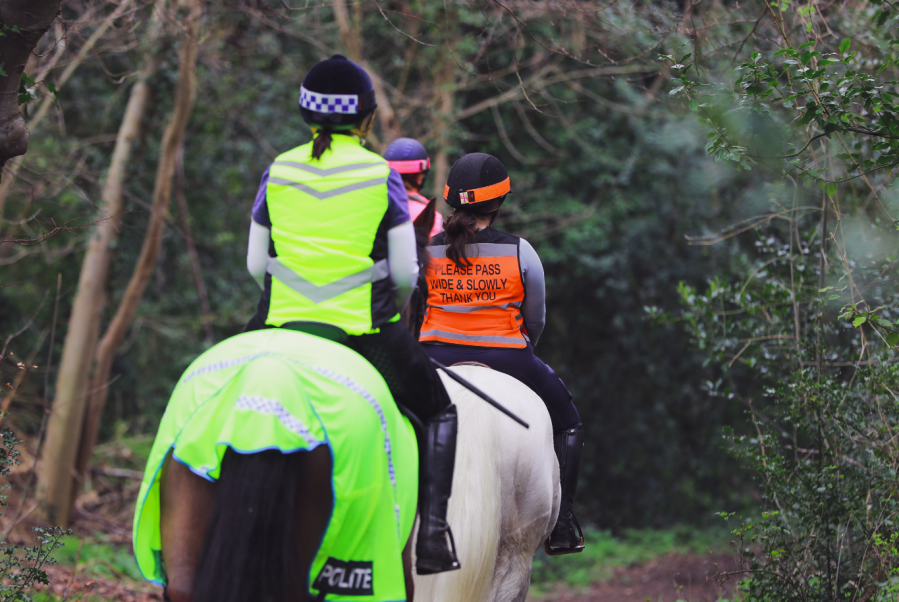
Image © Your Horse Library/Charlie Gooders Photography.