
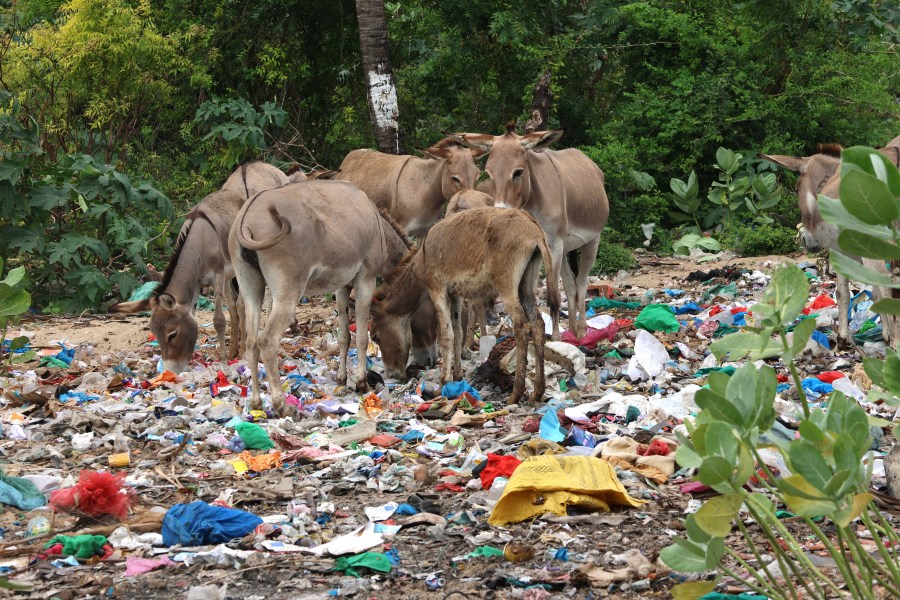
A study has revealed the devastating impact of plastic pollution on livestock, humans and the wider environment in Lamu, an island off the coast of Kenya.
Research by the Revolution Plastics Institute at the University of Portsmouth, The Donkey Sanctuary, The Flipflopi Project and the Kenyan Marine and Fisheries Research Institute found microplastics in 100 per cent of the donkey (and cattle) faecal samples they analysed in Lamu.
Previously the focus has been on how plastic waste is affecting marine animals but this study highlights the impact it is having on terrestrial working animals.
“Most plastic pollution originates on land, yet its impacts on land-based animals remain chronically understudied. Our findings show how urgently this knowledge gap needs to be addressed,” said Professor Cressida Bowyer, deputy director of the Revolution Plastics Institute at the University of Portsmouth.
Call for action
Vets at The Donkey Sanctuary’s clinic in Lamu have long been calling for action as a result of the increasing number of donkeys they are seeing who are dying as a result of escalating plastic pollution, however this is the first published evidence of its complete and widespread impact.
“This study is a wake-up call for collective action to end the plastics crisis here in Lamu. Time and time again we see firsthand the terrible – and preventable – suffering caused to donkeys who have ingested plastics,” said Dr Obadiah Sing’Oei, programme manager at The Donkey Sanctuary’s clinic in Lamu.
“This study provides hard evidence of the true scale of the problem and its widespread impact. Together with our partners we will not rest until we have a joined-up solution to create a safer environment for all.”
Researchers took a multi-disciplinary approach, quantifying the amount of microplastics in donkey and cattle faeces, observing their natural feeding behaviour and surveying local residents and visitors to understand their attitudes towards plastic pollution and donkey welfare.
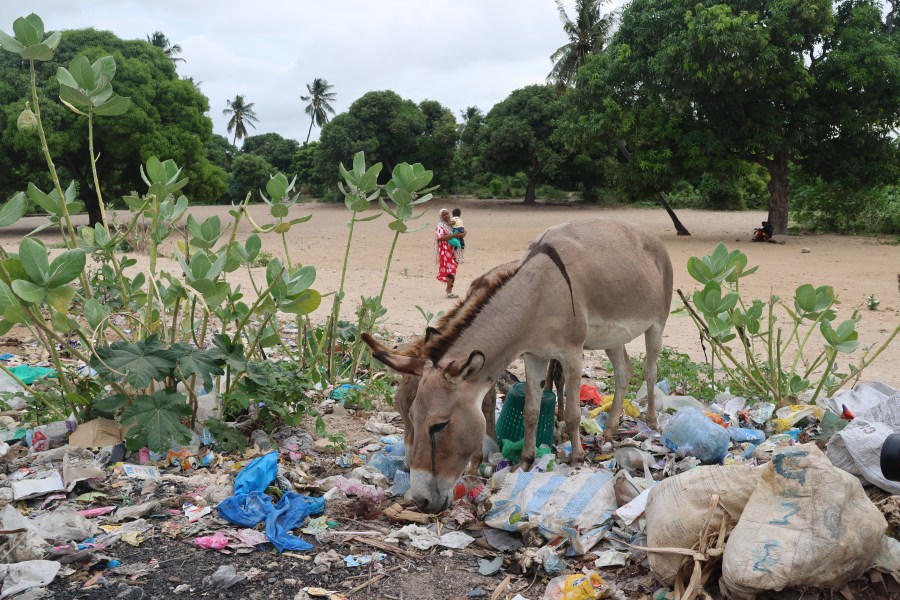
Lack of food
Fluctuating feed prices mean many donkey owners struggle to provide enough food for their animals who are then left to roam and find their own. A lack of grass or edible vegetation often meant these donkeys are foraging at waste sites.
Rather than restricting the movement of donkeys, researchers and residents are calling for community clean-ups, better waste disposal systems, and government investment in recycling and plastic alternatives.
“This study demonstrates the interconnectedness of animal, human and environmental health,” said Leanne Proops, Professor in Animal Behaviour and Welfare at The University of Portsmouth.
“Pollution is placing severe pressure on the environment, harming donkeys and other livestock, which in turn affects human health and livelihoods.
“Here we have clear evidence that microplastics are present across an entire animal population which has serious implications for the whole ecosystem.
“This problem extends far beyond Lamu – underscoring the urgent need for a holistic approach to mitigate the global plastic crisis.”
Images © The Donkey Sanctuary.