
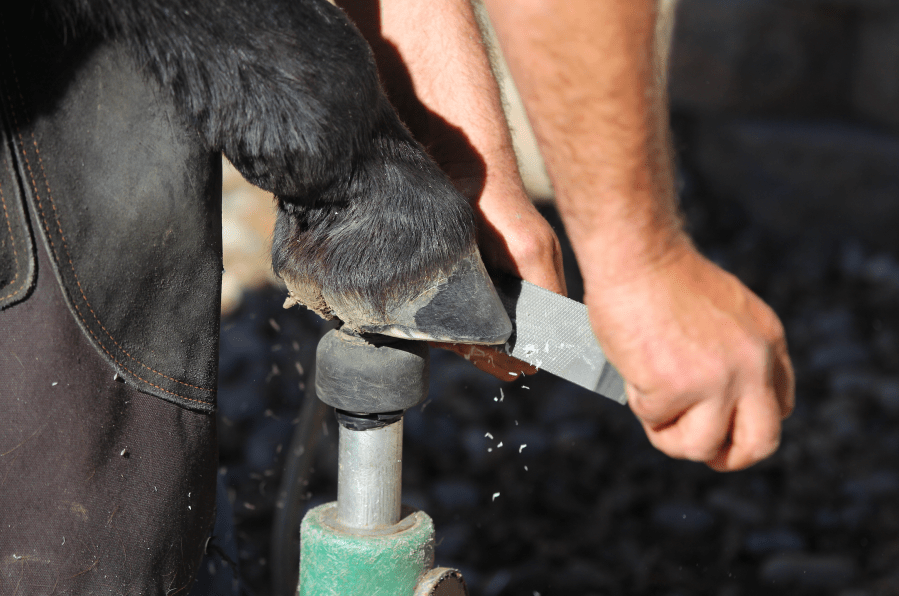
The farrier is an integral part of maintaining your horse’s health and well-being. Their regular visits ensure your horse’s feet are kept in the best condition and help prevent lameness but are you doing things your farrier wishes you wouldn’t? Are you making their job harder than it needs to be?
Master Farrier Ben Benson AWCF explains five key things which you should stop doing to help your farrier out and enable them to do their work more effectively and efficiently.
Don’t oil your horse’s feet before the farrier arrives
Whether you intentionally decided to spruce your horse up and make a special effort for the farrier, or you rode your horse and you didn’t think about it, oiling your horse’s hooves ahead of a visit from the farrier is a big no-no.
Everything a farrier does is about your horse’s feet so it means that whatever is on them or in them ends up being on the farrier or their tools. Not only does everything end up being covered in hoof oil, but everything also sticks to it.
A farrier’s rasp costs around £40 and lasts – depending on the weather – about a week. One oily, muddy horse can mean it lasts even less time.
If your farrier hot shoes your horse when it’s covered in hoof oil, that oil gets evaporated which is unpleasant for the farrier.
Don’t present your horse with wet and dirty legs
If you want to win brownie points from your farrier, make sure when they arrive at your yard your horse’s legs are clean and dry and their rug is the same.
The farrier spends most of his time working under your horse, so if they are wearing a wet, muddy rug that damp and dirt will be transferred onto them. Similarly, if your horse has wet, dirty legs the farrier’s clothes end up being damp and mucky from where they’ve held the horse’s leg between their legs.
The farrier spends all day in those clothes and they don’t want to have wet and dirty jeans all day. They want to look professional when arriving at the next customer and be allowed into shops to buy their lunch!
Just towel drying the horse’s legs and picking out their feet ahead of the farrier’s visit makes a massive difference to their job and the state of their clothes.
Don’t expect your horse to be shod in a wet, dirty and/or poorly lit environment
Farriers don’t need a £1m yard with bespoke facilities, but what they do need is somewhere clean, dry and (preferably) flat, where the horse isn’t stood in mud or water to shoe your horse.
Working in a wet environment is a health and safety issue and can be dangerous, particularly if your horse is being hot shod. Wet environments also ruin a farrier’s tools. If the area you are asking the farrier to work in is wet or muddy, simply rolling out two rubber mats before the farrier arrives can transform the environment and work really well.
The shoeing area needs to be large enough to allow access down both sides of the horse. The farrier must be able to walk down the side of a horse holding a hot shoe free from obstruction such as rugs hanging over doors, unless you want a new horseshoe logo melted into your rug.
Good light is also essential. A farrier’s work is predominantly done underneath the horse so they need to be able to see what they are doing. Poor light can affect their ability to see the white line (which can be only one to two millimetres wide in some horses) and the small structures in the horse’s hoof where the nails are placed. If you can’t clearly see in the stable or where you are expecting your farrier to work, it’s not good enough for them to shoe in.
Don’t use ill-fitting overreach boots
When a farrier asks you to use overreach boots, it’s because they want to avoid the hind foot standing on the heel of the front foot and pulling the shoe off.
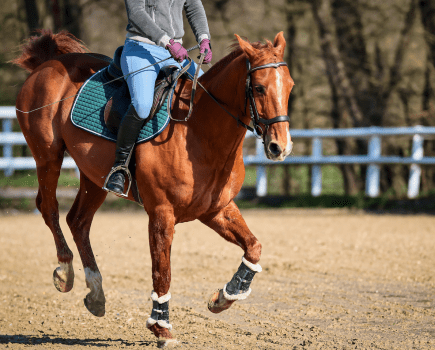
Many people buy overreach boots that only protect the bulbs of the heels, when in fact, what is needed is a slightly longer, deeper overreach boot that touches the ground at the back of the foot.
Farriers commonly see the old-style bell boots with the spines on them being used but they don’t protect the shoe as they sit a couple of inches off the ground. From a farrier’s perspective, the best overreach boots are slightly deeper, more warmblood-type boots. They sit lower, and they’re made of neoprene or a thick material. By having a boot that touches the ground at the back, it acts like a crumple zone instead of letting the toe grab the shoe and pull it off.
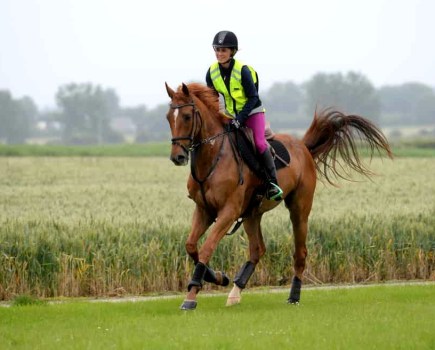
Good, well-fitting overreach boots should be used as soon as there’s some cut in the ground, or when the horse is lengthening, shortening, and collecting. Show jumping is an obvious example, as is hunting, eventing, cross-country, and even dressage. Any activity with changes in balance creates the opportunity for the horse to stand on itself. When the horse is turned out and galloping around, bucking and playing, that’s another time when it may benefit from wearing overreach boots.
Ultimately, a damaged or ripped overreach boot, as frustrating as it is, is saving you from a lost shoe. Lost shoes always seem to happen on a Friday, Saturday, or Sunday when you have a competition or plans with your horse. A ripped boot saves you money, stress, and a sore horse.
The secret is to have several different types of overreach boots: different makes, some with wool at the top, some plain neoprene, and to swap them regularly. Don’t keep the same ones on all the time, because that can cause pressure sores where they rub.
As soon as you take the boots off, wash them. Don’t let mud build up inside the top, as that can irritate the horse’s skin. If you’ve got a horse with sensitive skin, keeping that area clean is especially important.
Make sure the boots are in immaculate condition and have three or four pairs. Even boots of the same brand can fit slightly differently.
Do offer them a drink
It’s really important to offer your farrier a cup of tea or coffee! Their job is very physical with long hours and little or no breaks. Farriers go from playing tug-of-war, to hitting something with a hammer, to getting back in the van and driving to the next job and some of their hardest days are the dry yard days when everyone is busy. Having the chance to stop, drink a cup of tea, regroup, and refocus makes such a difference.
We run a competition throughout the year called #FeedTheFarrier. We have different categories, including a professional category, and it’s surprising how competitive some of the groups get with their offerings of cakes, sausage rolls and bacon sandwiches.
Engaging in #FeedTheFarrier really does make a difference. It’s amazing the improvement you can make to a farrier’s week, and even their day, just by offering them a cup of tea. Funnily enough, it also puts you right at the top of the emergency call-out list. If you make your farrier a cup of tea and a bacon sandwich, the moment you have a problem they’ll be there in a flash, because you’ve looked after them. That goodwill makes a huge difference when you’re on the other end of it.
It’s also important that bills are paid on time!
Ask the expert – Ben Benson
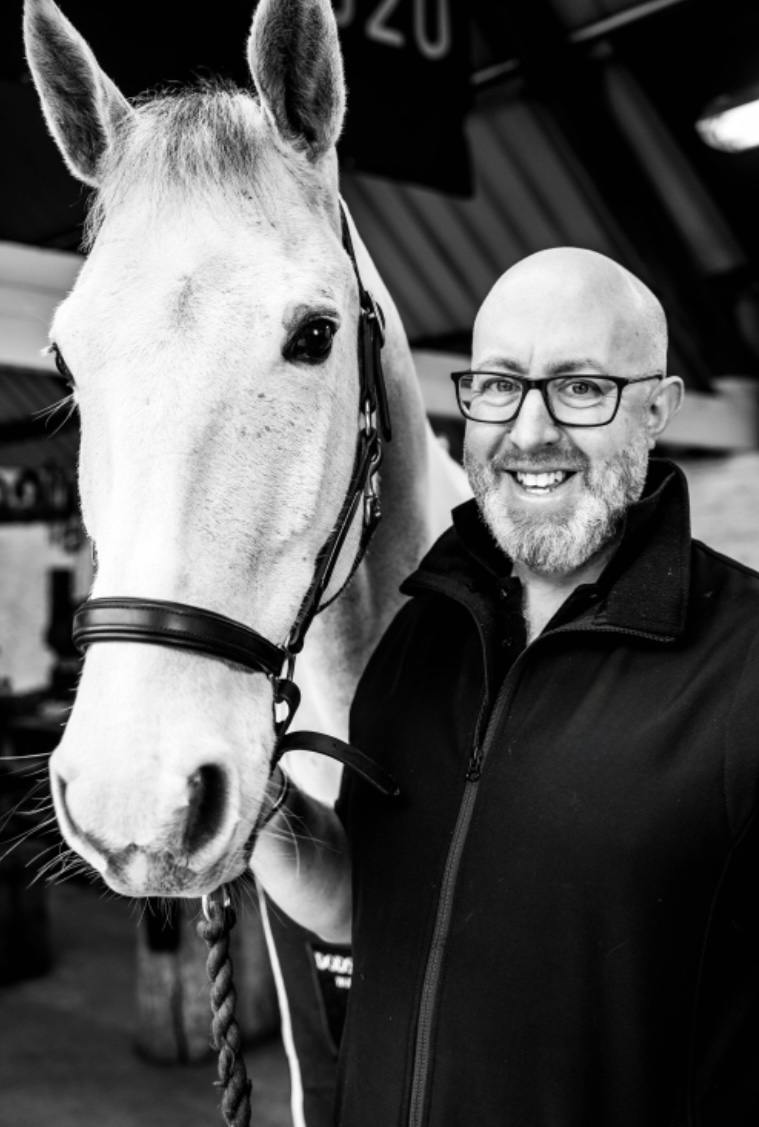
Ben Benson AWCF is a UK-based Master Farrier specialising in high-performance and remedial farriery for elite sport horses. He has worked with leading riders, veterinary teams, and championship horses worldwide, including involvement at the last four Olympic Games, supporting equine soundness and performance at the highest level. Alongside clinical practice, he contributes to education, consultancy, and product development within the international farriery industry.