
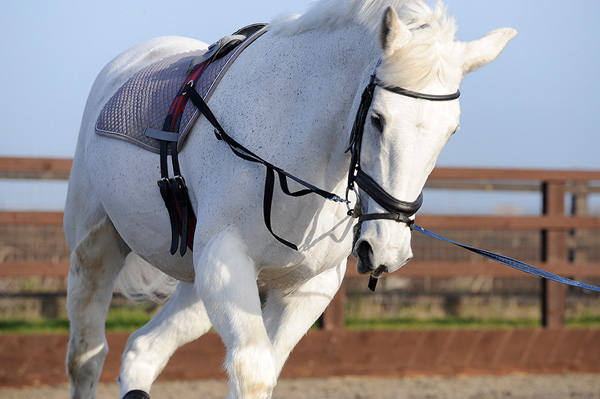
Side reins can be used when lunging a horse. One side rein is used on each side of the horse and they should only ever be used as a pair.
Each side rein clips to the bit ring and runs in a straight line back along the side of the horse to attach to the girth or roller (see main image, above).
How they work
When the horse raises or twists their head beyond a desired point, the side reins put pressure on the bit. This acts on the bars and the corners of the horse’s mouth and they learn to return their head to the correct position so that the pressure is released.
Training aids such as side reins are controversial, as they can cause more harm than good if used incorrectly. This is why they should only be used by experienced equestrians and on horses or ponies who are physically capable of working correctly while wearing them.
What they do
When used correctly, side reins can:
- Establish an initial contact with a young horse
- Develop topline
- Develop different frames /outlines progressively
- Establish acceptance of contact
- Improve suppleness through the back.
- Encourage a consistent and steady outline when the horse is working in a forward way.
- Achieve looseness of paces through suppleness.
“Side reins can help develop topline during lunging and, depending on the positioning of the reins on the girth and their length, the desired frame,” explains instructor and dressage rider Tara Osborn.
“Positioned low and long, they allow a rounder, deeper frame and encourage the horse to stretch and use the muscles of their back.
“The higher and shorter the reins, the more collected the outline and the shorter the frame – but this must be built up over time.”
Things that can go wrong
Proper adjustment of the length of rein for the stage of the horse’s training is vital.
“Too long and the horse won’t feel the contact and tend to become long and hollow – they won’t work through the back and so their topline and suppleness will show little improvement,” says Tara.
“By adjusting the reins too short, the horse will be forced into an incorrect outline with a tight neck and tense back, and become reluctant to go forward.”
Side reins must also be adjusted to equal lengths, or slightly shorter to the inside when working on a circle.
Uneven reins will develop a lop-sided horse. Ensure the horse is driven forward into the reins. Without this, muscle development won’t happen.
Side reins should only be used after a horse has been properly warmed up. They should also be allowed time to stretch and cool down with the side reins off at the end of a session.
Related content
- Topline: what and where it is, plus correct posture for building it
- Richard Davison dressage masterclass: why and how you should ride your horse in different outlines *video*
- 7 things we learned from Carl Hester’s dressage masterclass at Defender Burghley
- When to use a cavesson or bridle, plus other useful horse lunging equipment