
A gender insight review by working animal charity Brooke has revealed that women remain significantly underrepresented, undervalued and underserved within animal health systems across Africa, Asia and Latin America.
The review discovered that although women make up the majority of veterinary students in many regions, they account for just 20-30% of practising animal health professionals in low and middle-income countries.
“Women are entering veterinary education in record numbers, but structural barriers are pushing them out of frontline and decision-making roles,” said Ellie Parravani, external affairs advisor at Brooke.
“This is not only a gender equity issue, but it is also a systems failure with real consequences for animal health and rural resilience.”
Cultural issues
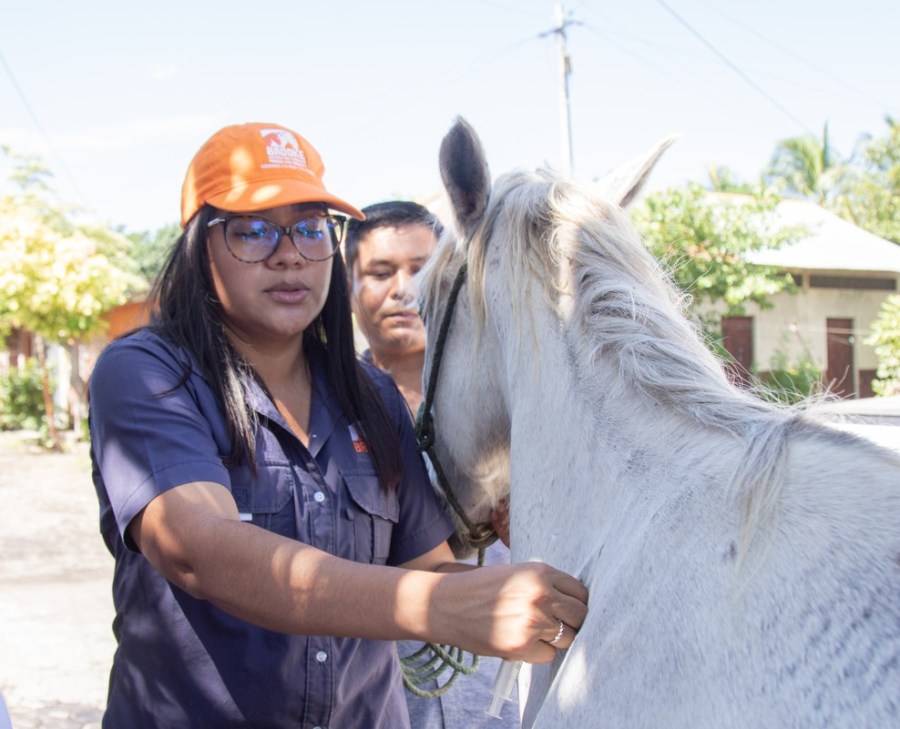
Cultural norms in many regions limit women farmers’ interactions with male veterinarians which consequently leaves major gaps in access to care. Women veterinarians and veterinary paraprofessionals (VPPs) are uniquely positioned to close this gap, improving access to timely treatment, vaccination, and disease prevention.
Gender responsive veterinary services are consistently linked to earlier disease detection, higher vaccination uptake, improved animal welfare practices, and better biosecurity outcomes.
Evidence from FAO and Brooke country partners shows that when women animal health practitioners are trained, supported, and deployed, disease surveillance improves, including for high-impact transboundary diseases such as foot-and-mouth disease, peste des petits ruminants, and avian influenza.
Despite their proven impact, women animal health practitioners face several challenges such as gender bias, pay inequality, limited access to practical training, mobility and safety risks, and disproportionate caregiving burdens.
Challenges
Women often report being paid less than their male colleagues for the same work or are denied services by farmers who question their competence, particularly in large animal practice.
The issue of safety is also a big concern for women, particularly in remote areas, where risks include harassment violence, and unreliable transport.
Gender-responsive training programmes for women VPPs in Nigeria and Uganda resulted in improved livestock survival, increased productivity, and a 53% rise in average monthly income for participants.
These gains extend beyond animal health. Increased income and professional recognition for women practitioners strengthen household resilience, improve food security, and contribute to broader rural economic stability.
“Not optional but essential”
“The evidence is clear, empowering women animal health practitioners is not optional but essential,” continued Ellie.
“Gender equity must be embedded as a core design principle in animal health policies, training systems, and workforce development strategies.
“When women are supported to thrive as animal health practitioners, animals are healthier, diseases are detected sooner, and rural communities are more resilient. The benefits extend far beyond gender equity; women strengthen entire animal health systems.”
New initiatives
Brooke has launched several initiatives to help overcome these challenges and support women into animal health systems. These initiatives include:
- Gender disaggregated needs assessments
- Blended online and face-to-face training and mentorship
- Childcare sensitive scheduling and transport support
- Animal handling skills training
- Male allyship programmes
- Challenge stereotypes and biased norms in communities and animal health systems.
There are also signs of change from global organisations such as the World Organisation for Animal Health (WOAH) which has established a gender task force and is developing a global gender strategy.
Recent continental workforce recommendations in Africa call for equal pay, safer workplaces, gender responsive education, and leadership pathways for women in veterinary services.
Image © Brooke.