
Nearly half of owners are not aware of the strangles vaccine, despite most admitting they worried about the highly infectious disease, a new horse health survey has found.
In addition, almost 60% of those surveyed by veterinary pharmaceuticals business Dechra said that their vet had not advertised or spoken to them about strangles vaccination.
Most (87%) were concerned about the risk of infectious diseases like strangles affecting their horse or yard and nearly 60% ranked strangles as the most-feared equine disease above influenza, equine herpes virus (EHV) and tetanus.
96% of horse owners vaccinated for influenza and tetanus as core vaccines, only 16% vaccinated for EHV and 16% for strangles.
Strangles is an extremely contagious illness in horses that affects their upper respiratory tract. It is caused by a bacterium called Streptococcus equi and is the most common equine infectious disease affecting horses around the world.
Approximately 10% of horses that recover from strangles become carriers of the disease, harbouring the bacteria that causes strangles in their guttural pouches without showing any symptoms. These carriers can then spread the infection to others, causing new strangles’ outbreaks.
The survey also highlighted that, despite concern about the risk of infectious diseases, a third of horse owners questioned had no isolation requirements for new horses moving to or visiting their premises, while only a quarter of horse owners would do a visual health check on new arrivals at a yard.
“Our research demonstrates that strangles is the most feared infectious disease in the UK, however owners are unaware that a vaccine is available to help protect their horses and isolation requirements are sadly lacking,” said Rachel Harrison-Osborne, veterinary surgeon at Dechra, the distributor of the strangles vaccine.
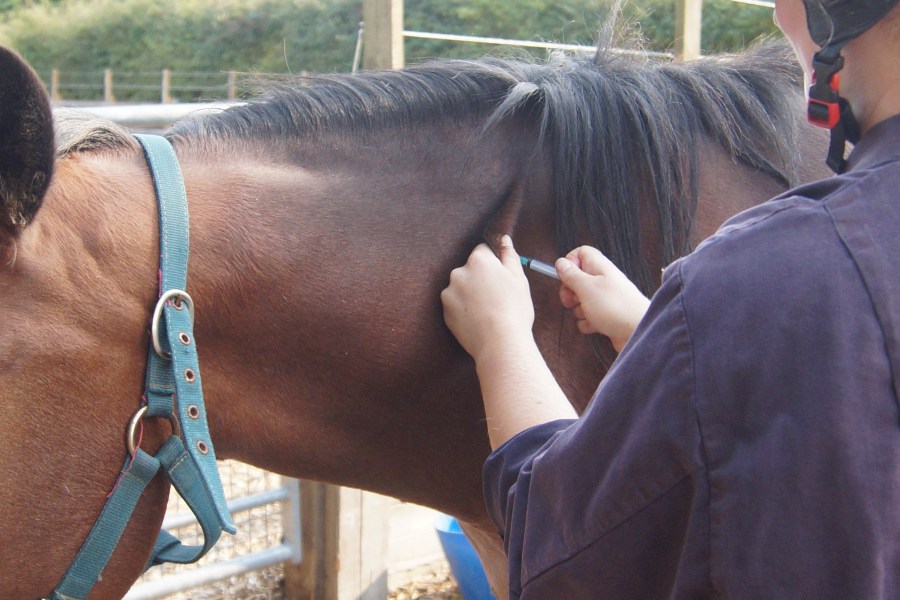
“To provide them with peace of mind when they are out and about with their horses, it is advisable that they speak to their vet about strangles vaccination which, alongside good biosecurity measures, will help protect their horses from the disease while circulating with others of unknown infectious disease status.”
Stopping the spread
Livery yard Meadowhead Equestrian near Kilmarnock, Scotland, has included strangles vaccination in its yard policy since 2023.
“Our whole yard was vaccinated in October 2023 to give our precious horses extra protection and us worriers peace of mind when out and about competing and exposure to the comings and goings of breaking and sales liveries,” said yard manager Catriona Balish.
“We have comprehensive biosecurity measures on our yard, which include isolation and testing procedures for new horses. Sadly, in November 2024 a horse that had recently joined us as a livery tested positive for the disease during his isolation period following a blood test and a guttural pouch wash. There were no clinical signs of the disease.
“Following the diagnosis, we went straight into lockdown and there was no movement of horses on and off the premises. We followed the procedures recommended by our vets which included the ongoing isolation of the affected horse, footbaths, minimal contact and temperature monitoring.
“We’re pleased to say that there was zero spread among the horses on our yard at the time of the strangles case and strangles vaccination is an ongoing requirement for our liveries. Our livery owners are completely behind this policy, and our view is if they don’t like it, then they’re not the right fit for our yard.”
Related content
- Strangles in horses: equine vet explains how to prevent, manage and treat this contagious disease
- Strangles bacteria lingers on webbing headcollars and tack much more easily than leather
- Norfolk horse charity restarts rehoming scheme after strangles outbreak forced shutdown
- New RVC study advances “knowledge around strangles transmission significantly”